

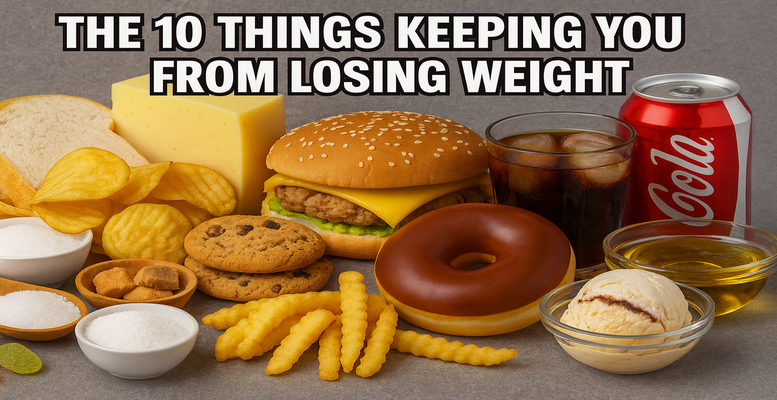
The 10 Things Keeping You From Losing Weight
Presented by Deb Anderson and Stanley Bronstein

Click The Plus Sign + on each of the individual sections below to get a discussion, on each of the items on the list.
Each section contains a short video and written information on each of the topics.
As always, please leave your comments and questions in the Comments Section below.
We will attempt to respond promptly.
IF YOU ARE UNABLE TO VIEW THE VIDEOS BELOW, YOU CAN VIEW ALL OF THEM DIRECTLY ON YOUTUBE BY CLICKING HERE
Key Insights Before We Get Started (with video below)
- At MPWLC, we are of the opinion that it is possible to lose weight, in a healthy manner, without drugs or surgery.
- We support all people in their weight loss journeys, no matter the type, but if you are starting from scratch, we recommend you try to avoid weight loss drugs or surgeries.
- Healthy weight loss is 90% Nutrition and 90% Healthy Mindset
- It’s all about the foods you put in your mouth AND the thoughts you put in your head
- When you make up your mind that you are committed to doing what it takes, healthy weight loss becomes MUCH easier.
- Proper nutrition is your foundation. Healthy mindset is the glue that holds it all together.
- Healthy weight loss is NOT about restriction. It is about replacing. Replacing unhealthy things you have been eating with healthy things.
- It’s not about going hungry. When you eat a healthy diet, you can easily fill yourself up on great tasting, healthy foods and never be hungry (yet still lose weight).
- It’s not about counting calories. Calories are important, but as you will learn throughout this Masterclass, there are many fantastic, healthy foods that are nutrient dense and low in calories.
3 "Truths" You Should Know Before We Begin (with video below)
-
Calorie Density vs. Nutrient Density
-
Calorie density (energy density) refers to the number of calories a food provides in relation to its weight (usually measured per gram or per 100 grams). It essentially tells you how “concentrated” the calories are in a given portion of food.
-
Foods with high calorie density pack a large amount of energy into a small weight or volume. These tend to be high in fat, added sugars, or low in water content. Examples include oils, cheese, nuts, fried foods, and pastries. Even small portions of these foods can contribute a significant amount of calories.
-
Foods with low calorie density provide fewer calories for their weight or volume. They typically have higher water and fiber content, which add bulk and volume without many calories. Examples include most fruits, vegetables, whole grains, beans, and broth-based soups. These foods allow people to eat larger, more satisfying portions while still keeping overall calorie intake lower.
Calorie density is an important concept in nutrition because it influences satiety, portion control, and long-term weight management. By favoring lower-calorie-dense foods, people can feel full and satisfied without consuming excessive calories, making it easier to maintain or lose weight naturally.
-
-
Nutrient density describes how rich a food is in essential nutrients relative to the amount of calories it provides. In other words, it’s about the quality of the calories you eat, not just the quantity. A food that is nutrient-dense supplies substantial amounts of vitamins, minerals, fiber, protein, antioxidants, and other beneficial compounds, while keeping its calorie content relatively modest.
-
High nutrient density foods include vegetables, fruits, legumes, whole grains, nuts, seeds, and lean proteins. For example, spinach or kale provide large amounts of vitamin A, vitamin C, iron, calcium, and fiber in very few calories.
-
Low nutrient density foods tend to be calorie-dense but nutrient-poor, often containing added sugars, refined grains, and unhealthy fats. Examples include soft drinks, candy, chips, and pastries. These foods provide energy but very little in terms of vitamins, minerals, or other health-promoting elements.
Nutrient density is an important concept in healthy eating because it encourages making food choices that deliver the most nutrition per bite. By focusing on nutrient-dense foods, you give your body the building blocks it needs for energy, repair, and protection against disease, while avoiding unnecessary “empty calories” that contribute little to your well-being.
-
-
-
Why Not All Carbs Are The Same
-
Carbohydrates are the body’s main source of energy, but their effects on health, weight, and blood sugar vary dramatically depending on their type, structure, and source.
1. Whole vs. Refined Carbs
-
Whole carbohydrates are found in foods like fruits, vegetables, legumes, and whole grains. They come naturally packaged with fiber, vitamins, minerals, and phytonutrients. The fiber slows digestion, keeps you full longer, and stabilizes blood sugar.
-
Refined carbohydrates (like white bread, pastries, soda, candy, and many processed foods) have been stripped of fiber and nutrients. They digest quickly, causing rapid spikes and crashes in blood sugar, which can fuel hunger and cravings.
2. Complex vs. Simple Carbs
-
Complex carbs (whole grains, beans, starchy vegetables) are made of longer chains of sugar molecules. They break down more slowly, providing steady energy.
-
Simple carbs (table sugar, high-fructose corn syrup, many sweets and sodas) are short chains that digest rapidly, often leading to energy spikes and crashes.
3. Nutrient Density Matters
Some carbs deliver powerful nutrition along with energy. For example:
-
Sweet potatoes give fiber, vitamin A, vitamin C, and potassium.
-
Berries supply antioxidants and fiber.
In contrast, a soda provides only sugar and calories, with no meaningful nutrients.
4. Effect on Satiety and Weight
Carbs with fiber and water (like beans or apples) are filling and can support weight loss. Carbs without fiber (like candy or white rice) are less satisfying and can lead to overeating.
-
-
-
Why Not All Sugars Are Equal
On a chemical level, all sugars are made up of simple molecules like glucose, fructose, and galactose. But in terms of how they affect the body and your health, not all sugars are created equal. The differences come from source, structure, processing, and delivery.
1. Natural Sugars vs. Added Sugars
-
Natural sugars are found naturally in foods like fruits (fructose), dairy (lactose), and some vegetables. When you eat these, the sugars are bundled with fiber, water, vitamins, minerals, and phytonutrients. This slows absorption and makes them healthier.
-
Added sugars are refined sweeteners (like table sugar, high-fructose corn syrup, agave syrup, or honey when used excessively) that manufacturers add to foods and drinks. They provide calories but little to no nutrients, making them a major driver of obesity, diabetes, and heart disease.
2. Whole Food Sugars vs. Isolated Sugars
-
Whole fruits and vegetables contain sugars that come with fiber, antioxidants, and water. For example, eating an apple releases sugar slowly, keeping blood sugar stable.
-
Fruit juice, soda, and candy strip away fiber and concentrate sugar. A glass of orange juice may have the sugar of three oranges — without the fiber to slow it down — leading to rapid blood sugar spikes.
3. Different Types of Sugars Behave Differently
-
Glucose: The body’s primary energy source; spikes blood sugar quickly.
-
Fructose: Processed mainly in the liver; in excess (like from high-fructose corn syrup) it can lead to fatty liver disease and insulin resistance. But in fruit, it’s harmless due to fiber and nutrients.
-
Lactose: Found in dairy; digested more slowly, though some people are lactose-intolerant.
4. Impact on Satiety
Sugars from whole foods promote satiety because they digest alongside fiber, protein, or fat. Added sugars digest fast, triggering cravings and overeating.
In short: Not all sugars are equal. Sugar from whole, natural foods comes with nutrients and fiber that protect health, while refined and added sugars are stripped of nutrition and can harm the body when overconsumed
-
#1 - The Four White Poisons (with video below)
#1 – The 4 White Poisons
White Sugar • White Flour • White Rice • White Salt
Why They’re Called Poisons
These foods have been so heavily refined and stripped of nutrients that they provide almost no benefit to the body. They are calorie-dense, nutrient-poor, and addictive — leading to cravings, overeating, and long-term health damage.
1. White Sugar
-
What it is: Refined sucrose, stripped of any natural minerals or fiber.
-
Why harmful: Causes rapid blood sugar spikes and crashes → fatigue, cravings, fat storage. Increases risk of diabetes, heart disease, and obesity.
-
Hidden sources: Sodas, candies, baked goods, sauces, condiments.
-
Swap: Whole fruits, dates, or small amounts of dried fruit (in moderation).
2. White Flour
-
What it is: Wheat stripped of bran and germ (the fiber and nutrient-rich parts).
-
Why harmful: Acts like sugar in the body → quickly digested, blood sugar roller coaster, minimal satiety.
-
Hidden sources: White bread, pasta, crackers, pastries, pancakes, tortillas.
-
Swap: 100% whole grain breads, sprouted grain wraps, oats, quinoa, brown rice pasta.
3. White Rice
-
What it is: Refined rice with husk, bran, and germ removed.
-
Why harmful: Loses fiber and nutrients; digests rapidly like pure starch; little satiety.
-
Hidden sources: White rice bowls, sushi rolls, instant rice.
-
Swap: Brown rice, wild rice, quinoa, barley, or farro.
4. White Salt
-
What it is: Refined sodium chloride stripped of trace minerals.
-
Why harmful: Excess sodium raises blood pressure, causes water retention and bloating, and increases risk of heart disease.
-
Hidden sources: Processed foods, canned soups, chips, condiments, restaurant meals.
-
Swap: Flavor with herbs, spices, garlic, onion, lemon juice, or vinegar. Use mineral-rich salts sparingly if needed.
Core Principles
-
Not all carbs are equal. Refined carbs like sugar, flour, and rice behave like added sugar in the body, while whole carbs (oats, beans, quinoa, fruits) digest slowly and fuel health.
-
Salt isn’t a carb, but when combined with fat or carbs in processed foods, it drives cravings and overeating.
Takeaway
Eliminating or reducing the 4 White Poisons is one of the fastest ways to jump-start weight loss, reduce cravings, and improve overall health.
#2 – Added Sugar (and Natural & Artificial Sweeteners) (with video below)
#2 – Added Sugar (and Natural & Artificial Sweeteners)
Why It Matters
Sugar in its natural state (in fruit, vegetables, whole foods) comes packaged with fiber, water, and nutrients that slow digestion and keep blood sugar stable. But once sugar is extracted, concentrated, or manufactured, it becomes a powerful disruptor of metabolism and weight control.
Added Sugar
-
What it is: Refined sugar (table sugar, high-fructose corn syrup, syrups) added to foods and drinks.
-
Why harmful:
-
Provides empty calories without nutrients.
-
Causes blood sugar spikes → insulin surge → fat storage.
-
Fuels cravings and addiction (the brain lights up like it does on cocaine).
-
Increases risk of obesity, type 2 diabetes, fatty liver, heart disease, and inflammation.
-
-
Where it hides: Soda, flavored yogurts, flavored milks, protein bars, cereals, coffee drinks, ketchup, dressings. It’s everywhere, so you have to look for it.
-
How to spot Added Sugars by reading nutrition labels
-
One of the most important skills you can develop is learning to read labels like a detective. On U.S. nutrition labels, there is now a separate line for “Added Sugars.” This tells you how much sugar was added during processing, beyond what occurs naturally in the food. Aim for zero or as close to zero as possible.
But don’t stop there — always check the ingredients list. Food companies use dozens of names for sugar to hide it in plain sight. Watch for: words ending in “-ose” (glucose, fructose, dextrose, sucrose), syrups (corn syrup, high-fructose corn syrup, brown rice syrup), and trendy names like agave nectar, cane juice, or coconut sugar. If sugar shows up in the first 3–5 ingredients, the food is loaded with it.
Rule of thumb: If you wouldn’t add that much sugar to your own cooking at home, don’t accept it in a packaged food.
-
Natural Sweeteners (Honey, Agave, Maple Syrup, Coconut Sugar)
-
Perception: Marketed as “healthier” because they are less processed and may contain trace minerals.
-
Reality:
-
Still concentrated sugar.
-
Still spike blood sugar and insulin.
-
Still calorie-dense and nutrient-poor.
-
Overuse = same weight-loss sabotage as refined sugar.
-
-
Key principle: “Natural” doesn’t mean harmless. They should be treated like added sugar.
Artificial Sweeteners (Aspartame, Sucralose, Saccharin, Acesulfame-K, etc.)
-
Perception: “Zero-calorie” sugar alternatives.
-
Reality / Why harmful:
-
Brain Confusion: They taste sweet but deliver no calories → brain and body get mixed signals, leading to increased appetite and cravings.
-
Gut Health Disruption: Research shows they alter your gut microbiome, which can affect weight regulation and blood sugar.
-
Insulin Response: Some artificial sweeteners still trigger insulin release even without sugar, pushing the body into fat-storage mode.
-
Reinforce Sweet Tooth: Keep you addicted to the taste of sweet, making it harder to enjoy natural, whole foods.
-
-
Bottom line: They may not add calories, but they keep you trapped in the cycle of cravings and overeating.
Better Alternatives
-
Whole fruit for sweetness.
-
Use spices like cinnamon, nutmeg, vanilla, and ginger to add natural flavor.
-
When needed, use small amounts of whole-food sweeteners (dates, raisins, blended fruit).
Core Principles
-
Not all sugars are equal — but almost all added sweeteners (refined, natural, or artificial) are harmful when overused.
-
The only truly safe sugars are those found inside whole, unprocessed foods.
Takeaways
If you want permanent weight loss, one of the most powerful steps you can take is to:
-
Cut out sodas, sugary drinks, and packaged foods with hidden sugars.
-
Avoid the trap of “natural” syrups and artificial sweeteners.
-
Retrain your taste buds to enjoy the natural sweetness of fruit.
#3 – Not Enough Fiber (with video below)
What Fiber Is
-
Fiber is the indigestible part of plant foods found in fruits, vegetables, beans, legumes, whole grains, nuts, and seeds.
-
Two main types:
-
Soluble fiber → absorbs water, slows digestion, stabilizes blood sugar (oats, beans, apples, flax).
-
Insoluble fiber → adds bulk, speeds digestion, keeps you regular (whole grains, vegetables, nuts, seeds).
-
The Fiber Gap
-
Recommended intake: 25–40 grams per day.
-
Average American intake: ~15 grams per day.
-
That means most people get less than half of what they need.
Why Too Little Fiber Is Harmful
-
Hunger & Overeating
-
Without fiber, food digests too quickly.
-
You feel hungry again soon after eating, leading to overeating and weight gain.
-
-
Blood Sugar Rollercoaster
-
Low-fiber meals cause rapid blood sugar spikes followed by crashes.
-
This cycle fuels cravings, makes it harder to lose weight, and increases risk of type 2 diabetes.
-
-
Calorie Density Problem
-
Low-fiber foods (meat, cheese, oils, refined carbs) are calorie-dense but not filling.
-
High-fiber foods (beans, vegetables, fruits) are filling but calorie-light.
-
-
Gut Health
-
Fiber feeds beneficial gut bacteria.
-
A strong microbiome improves metabolism, mood, and immunity.
-
Without fiber, gut bacteria starve → inflammation and poor digestion.
-
-
Chronic Disease Risk
-
Low fiber is directly linked to obesity, type 2 diabetes, hypertension, heart disease, certain cancers, and constipation.
-
Protein vs. Fiber: Busting the Myth
-
Many people believe: “I need more protein.”
-
Reality: The average American already gets more than enough protein (often 1.5–2x what’s needed).
-
What’s actually missing is fiber.
-
Nearly everyone is protein-sufficient.
-
~95% of Americans are fiber-deficient.
-
-
Protein is important — but fiber is the nutrient that prevents hunger, stabilizes blood sugar, and protects against diabetes.
Fiber’s Secret Power: Sugar Control & Diabetes Prevention
-
Fiber forms a gel-like mesh in the digestive system that slows sugar absorption into the bloodstream.
Why this matters:
-
Stable Blood Sugar → prevents big spikes and crashes that drive cravings.
-
Reduced Fat Storage → lower insulin response means less fat stored.
-
Diabetes Prevention → steady blood sugar helps protect against insulin resistance, the root cause of type 2 diabetes.
-
Lower Hypertension & Heart Risk → fiber helps lower cholesterol and blood pressure, reducing risks that often accompany diabetes.
-
Fruit Myth Busted → Whole fruit is safe and protective. Its natural sugars are released slowly because fiber slows absorption, unlike soda, candy, or juice that spike blood sugar and worsen diabetes risk.
Everyday Examples
-
Apple (with fiber): 95 calories, filling, slow digestion, steady blood sugar.
-
Apple juice (no fiber): 120 calories, absorbed in seconds, insulin spike, diabetes risk.
-
Cup of beans: 15 g fiber + protein → long-lasting satiety, stabilizes blood sugar, protects against diabetes.
-
Cup of white rice: 1 g fiber → fast absorption, hunger rebound, increased diabetes risk.
Solutions: How to Add More Fiber
-
Build Meals Around Fiber
-
Beans, lentils, peas, leafy greens, whole grains, and fruits.
-
Aim for a minimum of 10 g of fiber per meal.
-
-
Snack Smart
-
Choose fruit, raw veggies, nuts, seeds, or roasted chickpeas instead of chips or candy.
-
-
Boost Gradually
-
Increase intake slowly and drink water to avoid digestive discomfort.
-
Core Principle
Fiber is the missing nutrient in most modern diets. It allows you to:
-
Eat more food while consuming fewer calories.
-
Stay full and satisfied without hunger.
-
Control blood sugar, insulin, and fat storage.
-
Protect yourself against obesity, type 2 diabetes, hypertension, and heart disease.
Takeaway
If you’re struggling with hunger and cravings on a diet, the issue isn’t willpower — it’s fiber.
-
Nearly everyone already eats enough protein.
-
Almost everyone is deficient in fiber.
-
Adding more fiber-rich, nutrient-dense foods (beans, fruits, vegetables, whole grains) is the real solution to losing weight naturally, preventing type 2 diabetes, and protecting long-term health.
#4 – Ultra-Processed Foods (with video below)
What They Are
Ultra-processed foods are products that are industrially manufactured, often with a long list of ingredients you wouldn’t use at home. They’re designed to be convenient, cheap, hyper-palatable, and addictive.
Examples That Seem Obviously Unhealthy:
-
Chips, crackers, pretzels
-
Candy, chocolate bars, packaged cookies
-
Frozen meals and pizzas
-
Fast food burgers, fries, fried chicken
-
Packaged snack cakes, donuts, breakfast pastries
-
Processed meats (hot dogs, deli meats, sausages)
-
Ice cream and frozen desserts
-
Flavored instant noodles or boxed meal kits
Some Examples Of Sneaky “Healthy-Sounding” Ultra-Processed Foods
These foods are marketed as healthy but are really just disguised junk:
-
Protein Bars & Shakes
-
Often loaded with sugar, artificial sweeteners, and processed protein powders.
-
Essentially candy bars in disguise.
-
-
Flavored Yogurts
-
A single container can have as much sugar as a soda.
-
Additives, sweeteners, and “fruit blends” are usually sugar-heavy.
-
-
Granola & Granola Bars
-
Marketed as wholesome, but often baked with oils, sugar, and syrups.
-
Calorie-dense, nutrient-poor.
-
-
Diet Frozen Meals
-
Appear low-calorie, but packed with sodium, additives, and low-quality ingredients.
-
Leave you unsatisfied and craving more food.
-
-
Vegetable Chips or “Baked” Snacks
-
Processed, fried, and salted — not the same as eating vegetables.
-
Still calorie-dense with little fiber.
-
-
Breakfast Cereals (even “whole grain” versions)
-
Often fortified with synthetic vitamins to appear healthy.
-
Still loaded with added sugar.
-
-
Sports & Energy Drinks
-
Marketed as hydration, but loaded with sugar, artificial sweeteners, and chemicals.
-
Unnecessary unless you’re an elite athlete training for hours.
-
Why They’re Harmful
-
Engineered Addiction
-
Food scientists combine salt + sugar + fat to hit the “bliss point.”
-
This combo hijacks your brain’s reward system, making you want more — even when you’re full.
-
-
Calorie Density Trap
-
Small volume, huge calories.
-
Example: A single bag of chips (300–400 calories) can be eaten in minutes. The same calories in vegetables could fill a plate or two.
-
-
Nutrient Poverty
-
Stripped of fiber, vitamins, and minerals.
-
Often replaced with artificial colors, preservatives, stabilizers, and flavorings.
-
-
Hidden Sugars and Fats
-
Packaged foods often contain multiple types of sugar and unhealthy oils (soybean, palm, cottonseed).
-
Labels are designed to confuse you.
-
-
Health Risks Beyond Weight
-
Linked with obesity, diabetes, heart disease, fatty liver, and even depression.
-
The more ultra-processed food in the diet, the higher the risk of chronic disease.
-
-
They trick people into overeating because they sound healthy.
-
They keep cravings alive (sugar + fat + salt combo).
-
They reinforce emotional eating — you feel like you’re making a “good choice” but you’re not.
Core Principle
Calorie density vs. nutrient density.
-
Ultra-processed foods pack calories without nutrients, keeping you hungry and overeating.
-
Whole foods give you fiber, water, and nutrition that naturally regulate appetite and weight.
Solutions
-
Shop the perimeter of the grocery store (produce, grains, beans, fresh foods).
-
Read labels → if it has more than 5–6 ingredients, or things you can’t pronounce, it’s likely ultra-processed.
-
Meal prep, in advance, simple, whole-food staples (beans, rice, salads, roasted vegetables).
-
Keep healthy snacks handy: fresh fruit, unsalted raw nuts, cut veggies, hummus.
-
Crowd out junk → the more you eat real foods, the less you’ll crave processed ones.
Takeaway
Ultra-processed foods are designed to keep you overweight — it’s not your fault you crave them. But once you understand the trap and shift to whole foods, cravings weaken, energy rises, and weight loss feels natural.
#5 – Oils & Hidden Fats (with video below)
What They Are
-
Refined liquid fats extracted from plants or seeds (olive oil, coconut oil, canola oil, vegetable oil, corn oil, sunflower oil, etc.).
-
Also includes hidden fats in foods like salad dressings, nut butters, restaurant meals, fried foods, and baked goods.
Why They’re Harmful
-
Extreme Calorie Density
-
Oils are the most calorie-dense food on earth — 120 calories per tablespoon.
-
No fiber, no water, very few nutrients.
-
A couple of “innocent” tablespoons = hundreds of invisible calories.
-
Low Satiety
-
Because oils are pure fat with no bulk, they don’t trigger fullness.
-
Easy to consume excess without realizing it.
-
Hidden Calories in “Healthy” Foods
-
Restaurant salads drenched in dressing can top 800–1,000 calories.
-
A slice of “whole grain” bread with butter/oil spread can double in calories.
-
Nut butters: a “tablespoon” often becomes 2–3 heaping spoons = 200–300 calories added instantly.
-
Inflammation & Health Risks
-
Many refined oils (corn, soybean, vegetable, palm) are highly processed, oxidized, and linked to inflammation.
-
Too much omega-6 oil (common in processed foods) disrupts balance in the body and may fuel chronic disease.
The “Healthy” Oil Trap
-
Olive oil and coconut oil are marketed as “heart-healthy.”
-
While they may contain antioxidants or medium-chain fats, they are still calorie-dense, refined fats.
-
Pouring olive oil over food does not make it “healthy” if it pushes you into calorie surplus.
Core Principle
-
Oils are calorie-dense without fiber or bulk.
-
Whole-food fats (avocados, nuts, seeds, olives in their whole form) provide the same healthy fats but with fiber, nutrients, and satiety.
Solutions
-
Cook differently:
-
Use water or vegetable broth for sautéing.
-
Try air-frying or baking instead of frying.
-
-
Swap dressings:
-
Make oil-free dressings with balsamic vinegar, lemon, mustard, tahini, blended beans, or avocado.
-
-
Measure, don’t pour: If you do use oil, measure it carefully instead of free-pouring.
-
Favor whole-food fats: Avocados, nut butters (in moderation), flax, chia, walnuts.
-
-
Restaurant awareness: Ask for dressings on the side. Request meals grilled or baked instead of fried.
-
A Few More Points
-
Evolutionary Mismatch
-
For most of human history, people got fats from whole foods (nuts, seeds, avocados, coconuts, olives).
-
The idea of extracting oil and pouring pure fat onto food is extremely unnatural and only became common in the last ~150 years.
-
Our bodies are not designed to handle such concentrated calorie sources.
-
-
Oil-Free Cultures & Longevity
-
Populations in “Blue Zones” (where people live the longest, healthiest lives) eat very little or no refined oil.
-
Their fats come mainly from nuts, seeds, olives, and fish (in coastal regions).
-
This is evidence that we don’t need oils to thrive, just the healthy fats.
-
-
Hidden Restaurant Oils
-
Even “healthy” restaurant meals are often drowning in oils because they add flavor and texture cheaply.
-
Grilled veggies, stir-fries, pasta, even whole-grain bread at restaurants are brushed or sautéed in oil before serving.
-
Teaching participants to ask for “light oil” or “no oil” can save hundreds of calories per meal.
-
-
Nut Butters & “Healthy” Fats in Moderation
-
Natural peanut butter, almond butter, and tahini are much better than oils — but they’re still calorie-dense.
-
A “tablespoon” often becomes 3, which is 300+ calories.
-
Message: They’re healthy, but moderation is critical.
-
Takeaway
Oil isn’t “evil,” but it’s concentrated fat without satiety. If you’re struggling to lose weight, cutting back on oils and hidden fats is one of the fastest ways to reduce calories without feeling deprived. Replace them with whole-food fats that fill you up instead of sneaking into your meals.
#6 – Cheese, Butter & Dairy Fats (with video below)
What They Are
High-fat dairy products that concentrate calories, saturated fat, and sodium. These include:
- Cheese (all forms — shredded, sliced, blocks)
- Butter & cream (often hidden in cooking)
- Whole milk, half-and-half
- Ice cream and frozen dairy desserts
Why They’re Harmful
- Calorie Density & Portion Size
- Cheese: ~110 calories per ounce (2 dice-sized cubes). Most people eat 3–4x that at once.
- Butter: ~100 calories per tablespoon, often melted invisibly on bread, pasta, or vegetables.
- Ice Cream: 250–400 calories per cup, combining sugar + fat into an addictive “double whammy.”
- The Addictive Combo (Fat + Salt, or Fat + Sugar)
- Cheese delivers the fat + salt “bliss point” → keeps you eating.
- Ice cream hits fat + sugar simultaneously → one of the most addictive food combinations known.
- Butter enriches flavor so much you eat more without realizing it.
- Low Nutrient Density
- Yes, dairy provides protein and calcium.
- But it comes packaged with saturated fat, sodium, and hormones that don’t support long-term health.
- Crowds out higher-nutrient foods like beans, greens, fruit.
- Health Risks
- High in saturated fat → contributes to heart disease, inflammation, and obesity.
- Dairy proteins can aggravate acne, hormone imbalances, or digestive issues for many.
- Hidden in Restaurants
- Butter and cream are added to sauces, soups, pasta, casseroles, even vegetables.
- Cheese is piled on salads, pizzas, tacos, and sandwiches.
Non-Dairy Alternatives: A Better Choice
- Plant milks (soy, almond, oat, cashew, pea protein) are generally healthier because:
- Lower in saturated fat than dairy.
- Often fortified with calcium and vitamin D, making them equal or superior nutritionally.
- More protein in certain plant milks — especially soy milk and pea protein milks — which actually contain as much or more protein per serving than cow’s milk.
- No cholesterol (dairy has cholesterol).
- No lactose (easier on digestion for many people).
- Best picks: Unsweetened, fortified varieties (soy, pea, oat).
- Avoid: Sweetened flavored versions (vanilla, chocolate) that load sugar back in. Read the label – they undoubtedly have “added sugar”
Core Principle
- Dairy fats are calorie-dense with low satiety and fuel cravings.
- Non-dairy milk alternatives provide protein, nutrients, and creaminess without the baggage of saturated fat, cholesterol, and hormones.
Solutions
- Use sparingly: If you use cheese or butter, treat them as condiments, not staples. We recommend using them as little as possible. Over time, you will get used to it.
- Smart swaps:
- Nutritional yeast for cheesy flavor.
- Avocado, hummus, or bean dips for creamy spreads.
- Frozen bananas blended (“nice cream”) for a healthy ice cream substitute.
- Upgrade your milk:
- Choose soy or pea protein milk for protein + nutrients.
- Use almond, cashew, or oat for creaminess in coffee or cooking.
- Always pick unsweetened, fortified versions.
- Restaurant strategy: Ask for butter/cheese on the side or skip it entirely.
Takeaway
Cheese, butter, cream, and ice cream are weight-loss kryptonite — concentrated calories that hijack your cravings without nourishing your body. By cutting back, swapping for plant-based alternatives, and leaning on non-dairy milks (especially protein-rich soy), you reduce calories, improve your nutrient intake, and still enjoy creamy, satisfying foods.
#7 – Excess Salt (with video below)
What It Is
-
Salt (sodium chloride) is a mineral the body needs in small amounts for muscle contraction, nerve signaling, and fluid balance.
-
The problem isn’t salt itself — it’s the excessive amounts hidden in processed and restaurant foods that overwhelm the body.
Why It’s Harmful
-
Water Retention & Bloating
-
Extra sodium pulls water into your tissues, causing puffiness, bloating, and discouraging fluctuations on the scale.
-
-
High Blood Pressure & Heart Risks
-
Chronically high sodium intake stiffens blood vessels and contributes to hypertension, strokes, and heart disease.
-
-
Craving Amplifier
-
Salt boosts the flavor of fat and processed carbs.
-
Chips, fries, cheese, pizza, and fast food are engineered around this addictive salt + fat combo.
-
-
Hidden Sources
-
Only ~10% of sodium comes from the salt shaker.
-
~70–75% comes from packaged, canned, or restaurant foods, where salt is used as a cheap preservative and flavor enhancer.
-
Why You Don’t Usually Need to Add Salt
-
Whole foods are naturally flavorful. Vegetables, beans, whole grains, and fruits come alive with herbs, spices, and citrus.
-
Automatic salt use is a habit, not a need. Many people add salt before even tasting their food. Breaking this reflex can cut intake drastically.
-
Your taste buds reset. Within 2–3 weeks of eating less salt, you’ll find that whole foods taste richer, and restaurant foods will start to taste too salty.
-
Herbs and spices > salt. Garlic, onion, black pepper, paprika, turmeric, basil, oregano, cilantro, chili, rosemary, and vinegar or lemon can give meals more depth than salt ever could.
Daily Sodium Needs
-
General guideline: ≤2,300 mg/day (~1 teaspoon of table salt).
-
Best for heart health: closer to 1,500 mg/day.
-
Average U.S. intake: 3,400–4,000 mg/day.
Special Note:
-
If you work a job with heavy sweating (e.g., outdoor work in hot weather, construction) or do intense exercise that causes a lot of sweat loss, your sodium needs may be slightly higher, since the body loses salt through sweat.
-
In these cases, a bit more sodium is appropriate, but balance is key — don’t overcompensate with processed salty foods. Choose natural electrolyte replacements (coconut water, fruit, or light salting of whole foods if needed).
Solutions
-
Cook Without Salt
-
Use herbs, spices, citrus, or vinegar instead.
-
If desired, add a tiny sprinkle at the end instead of salting during cooking. This makes a small amount taste more intense.
-
-
Break the Reflex
-
Always taste your food before reaching for the salt shaker.
-
Ask yourself: Does this dish actually need salt, or am I just used to adding it?
-
-
Read Labels Carefully
-
Aim for packaged foods with <200 mg sodium per serving.
-
Rinse canned beans/vegetables to wash away extra sodium.
-
-
Dining Out Strategy
-
Ask for sauces and dressings on the side.
-
Request “no added salt” or “light salt” when possible.
-
Favor grilled, steamed, or roasted foods over fried or sauced.
-
Takeaway
Salt doesn’t add calories, but it fuels cravings, bloating, and hidden weight gain. Breaking the salt habit makes whole foods taste better, helps you feel lighter, and lowers your health risks.
For most people, there’s no need to add salt to meals — herbs, spices, and fresh ingredients create more vibrant flavors. If you sweat heavily from work or exercise, you may need a bit more sodium, but the solution isn’t processed salty foods — it’s small, intentional adjustments with whole foods and hydration.
#8 – Liquid Calories (with video below)
What They Are
Any beverage that contains sugar, fat, or alcohol, delivering calories without providing satiety. Common examples:
-
Sodas (regular and diet versions — see note below)
-
Fruit juices (even “100% juice”)
-
Energy drinks
-
Sweetened teas and coffees (lattes, frappuccinos, bottled teas)
-
Sports drinks
-
Alcohol (beer, wine, cocktails, mixed drinks)
-
Even “smoothies” made with juice, yogurt, or syrups
Why They’re So Harmful
-
No Satiety
-
Your body doesn’t register liquid calories the same way it does solid food.
-
You can drink 300–500 calories in minutes and still feel hungry.
-
Blood Sugar Rollercoaster
-
Sugary drinks cause rapid glucose and insulin spikes, followed by crashes → cravings, fatigue, overeating later.
-
Hidden Calorie Load
-
A single 20-oz soda = ~240 calories + 15–20 teaspoons of sugar.
-
A “healthy” smoothie or fancy coffee drink can easily pack 400–600 calories — the equivalent of a meal.
-
Alcohol’s Double Problem
-
Alcohol itself is calorie-dense (7 calories per gram, nearly as much as fat).
-
Often mixed with sugary juices or syrups.
-
Lowers inhibitions → makes it easier to overeat.
-
Artificial Sweeteners (in “diet” drinks)
-
Even though they’re low- or no-calorie, they confuse your brain and body:
-
Train your taste buds to crave more sweet.
-
Disrupt gut microbiome.
-
May trigger insulin response despite no calories.
-
Keep you stuck in the “sweet cycle.”
-
Core Principle
-
Liquid sugar is the most damaging form of sugar. It bypasses the body’s fullness mechanisms and accelerates fat storage.
-
Artificially sweetened drinks don’t solve the problem — they keep cravings alive.
Solutions
-
Replace soda/juice with:
-
Water (flat or sparkling)
-
Infused water with lemon, cucumber, or berries
-
Unsweetened tea (green, black, herbal)
-
Black coffee
-
-
If drinking alcohol:
-
Limit frequency and quantity.
-
Avoid sugary mixers.
-
Stick to clear spirits with sparkling water and citrus if you do drink.
-
Can You Make Smoothies Out Of Fruit?
Yes — you can definitely make smoothies with fruit, and they can be part of a healthy, weight-loss friendly lifestyle — but there are some important distinctions to keep in mind:
✅ When Fruit Smoothies Are Healthy
-
Whole fruit, not juice → Use bananas, berries, mango, apples, etc. blended whole (with pulp and fiber intact). Keeping the fiber is key!
-
Add greens or veggies → Spinach, kale, cucumber, zucchini, or carrots boost nutrients and lower calorie density.
-
Protein & fiber balance → Add beans, oats, chia, flax, or a little nut butter to slow digestion and increase satiety.
-
No (or minimal) sweeteners → Skip honey, agave, syrups, or flavored yogurts that can turn it into a sugar bomb.
⚠️ When Smoothies Become a Problem
-
Fruit juice base (orange juice, apple juice, bottled juices) → removes fiber, leaving you with liquid sugar.
-
Too much fruit → blending 3–4 bananas, 2 cups of mango, and apple juice can deliver 500+ calories and a huge sugar load without the satiety of eating whole fruit.
-
Added sugars & sweeteners → honey, agave, flavored syrups, or “smoothie shop blends” that already contain sugar.
-
Hidden calories → ice cream, sweetened yogurts, or nut butters in large amounts.
⭐ Best Practice for MPWLC Participants
Think of smoothies as a meal replacement or nutrient boost, not as an everyday “snack.”
-
Use 1–2 servings of fruit (e.g., banana + berries).
-
Add greens (spinach, kale, cucumber).
-
Add a fiber or protein source (chia, flax, beans, oats, unsweetened soy milk).
-
Use water or unsweetened plant milk (soy, hemp or almond) as the base, NOT DAIRY MILK.
This way, you’re keeping calorie density reasonable while maximizing nutrient density.\
Takeaway
If you change nothing else about your diet but eliminate liquid calories, you can drop hundreds of calories a day — adding up to tens of pounds lost over a year.
#9 – Portion Distortion (with video below)
What It Is
-
Over the past 40 years, portion sizes in restaurants, packaged foods, and even at home have dramatically increased.
-
Today’s “normal” meal is often 2–3 times larger than what our bodies actually need.
-
As a result, people no longer know what a true serving looks like — and often overeat without realizing it.
Why It’s Harmful
-
Calorie Overload Without Awareness
-
A pasta dish in a restaurant can easily top 1,200–1,500 calories — half or more of daily needs.
-
Muffins, bagels, sodas, burgers, and snacks are super-sized compared to decades ago.
-
-
Satiety Mismatch
-
With calorie-dense foods (cheese, oils, fried foods), even small portions pack huge calories but don’t keep you full.
-
With nutrient-dense foods (vegetables, beans, fruits, whole grains), large portions provide fewer calories and much greater satiety.
-
-
Mindless Cues
-
People eat what’s in front of them — regardless of hunger.
-
Larger plates, packages, and containers make overeating the default.
-
The Real Problem: It’s Not Just About Eating Less
-
Many diets focus on cutting portions or calories — “just eat less.”
-
This approach often leads to hunger, frustration, and rebound weight gain.
-
The truth: You can’t win long-term if you’re hungry all the time.
👉 The solution isn’t simply to shrink portions — it’s to change the types of foods on your plate.
-
Calorie-dense foods (oils, cheese, fried foods, refined carbs): Small amounts = big calorie hits.
-
Nutrient-dense, fiber-rich foods (vegetables, beans, fruits, whole grains): Large amounts = fewer calories + more satiety.
In plain English – Eat fewer calorie-dense foods and more nutrient-dense foods.
Core Principle
-
Weight loss happens naturally when you replace calorie-dense foods with nutrient-dense, fiber-packed foods.
-
Fiber and water add bulk, trigger fullness, and stabilize blood sugar.
-
This lets you eat more food, feel full, and still lose weight — no restriction or hunger required.
Everyday Examples of Portion Distortion
-
Bagels: Then ~3 oz (~200 calories). Now ~6 oz (~400–500 calories).
-
Muffins: Then ~150–200 calories. Now ~400–600 calories.
-
Soda: Then 8 oz “small.” Now 20 oz “small” = ~240 calories and lots of added sugar.
-
Pasta: Serving = 1 cup cooked (~200 calories). Restaurants serve 3–4 cups (~600–800 before sauce/cheese).
Solutions
-
Shrink the Plate for Calorie-Dense Foods
-
Smaller bowls or plates reduce portions of oils, cheese, refined carbs.
-
-
Pile on Nutrient-Dense Foods
-
Make half (or more) of your plate vegetables, beans, or salad.
-
Fill up on foods that deliver satiety with fewer calories.
-
-
Quick Visuals
-
Protein (beans, tofu, lentils): size of your palm.
-
Whole grains/starches: size of your fist.
-
Fats (avocado, nuts, seeds): size of your thumb.
-
Vegetables: unlimited — eat until satisfied.
-
-
Restaurant Strategies
-
Share entrées or box half before eating.
-
Ask for extra vegetables instead of fries.
-
Request sauces/dressings on the side.
-
-
Mindful Eating
-
Eat slowly, chew thoroughly, and stop when satisfied (not stuffed).
-
Wait 20 minutes before deciding if you need more.
-
Takeaway
Portion distortion isn’t solved by eating less — it’s solved by eating differently.
-
Cutting calories and shrinking portions without changing food quality leads to hunger and failure.
-
The sustainable path is to eat fewer calorie-dense foods and more nutrient-dense, fiber-rich foods.
-
This way, you can eat plenty of food, feel satisfied, and still lose weight — naturally, healthily, and permanently.
#10 – Mindless & Emotional Eating (Mindset Factor) (with video below)
What It Is
-
Eating for reasons other than true physical hunger — often driven by stress, boredom, loneliness, or habit.
-
Also includes distracted eating (TV, phone, computer), where food is consumed mindlessly without awareness of quantity or satisfaction.
Why It’s Harmful
-
Emotional Triggers Lead to Calorie-Dense Foods
-
Stress or sadness rarely trigger cravings for broccoli.
-
Instead, people turn to chips, candy, buttered bread, cheese, fried foods, ice cream — foods that are high in sugar, fat, and salt.
-
-
Automatic Behavior
-
Many people sprinkle salt, open the fridge, or grab snacks without thinking.
-
This bypasses natural hunger cues and leads to overeating.
-
-
The Brain’s Reward Trap
-
Comfort foods flood the brain with dopamine and endorphins, providing temporary emotional relief.
-
This rewires the brain to use food as a coping mechanism, reinforcing emotional eating → guilt → more emotional eating.
-
The Primary Purpose of the Food We Eat
-
The true purpose of food is to fuel the body — to provide energy, nutrients, and building blocks for strength, repair, and vitality.
-
Pleasure from food is important, but it should always be secondary.
-
The problem is that many people have it backwards:
-
They eat primarily for pleasure, comfort, and cravings.
-
Fuel becomes an afterthought.
-
-
This reversal leads to overeating, poor choices, and emotional dependency on food.
👉 Mindset shift:
-
Eat first for fuel.
-
Allow pleasure to be a bonus, not the driver.
-
Before eating, ask: “Am I fueling my body, or feeding an emotion?” If you’re eating the food solely for pleasure, consider whether or not you should be eating it.
Why Mindset Is Key
-
Comfort foods (fat + sugar + salt) are engineered to hijack willpower.
-
That’s why healthy weight loss is 90% between the ears.
-
Without addressing emotional triggers and mindset, even the best nutrition plan won’t work long term.
Core Mindset Principles for Mastery
-
Awareness → Pause and ask: Am I hungry or triggered? Keep a food + mood journal.
-
Belief → Trust that you can change your relationship with food.
-
Discipline & Commitment → Consistency matters more than motivation.
-
Self-Compassion → Progress, not perfection. Every choice is feedback, not failure.
Solutions
-
Slow Down → Eat mindfully without screens; put down the fork between bites.
-
Build Non-Food Coping Skills → Walk, journal, meditate, breathe, or call a friend.
-
Reshape the Environment → Keep tempting foods out of reach; stock fruits, veggies, beans, and other healthy options.
-
Replace Rituals → Swap “TV + chips” with “TV + herbal tea” or “TV + stretching.”
Takeaway
Food isn’t the enemy — but we must restore its true purpose.
-
Eat to fuel first.
-
Enjoy pleasure second.
-
Break the cycle of eating for emotions or distractions.
-
When you eat with awareness, fuel your body with nutrient-dense foods, and manage emotions without relying on food, you gain both freedom and permanent results.
Closing Mindset Message
“Healthy weight loss is 90% mindset. When you stop eating your emotions and start fueling your body, you take back control. Food stops controlling you, and you finally begin to live in freedom — with health, energy, and confidence.”
BONUS - #11 – Sleep & Recovery (with video below)
What It Is
-
Sleep and rest are the body’s natural reset buttons.
-
Without proper recovery, even the best nutrition and exercise habits can’t deliver full results.
Why It’s Harmful to Neglect Sleep
-
Hormonal Chaos
-
Lack of sleep disrupts hunger and satiety hormones:
-
Ghrelin ↑ (hunger hormone) → makes you hungrier.
-
Leptin ↓ (satiety hormone) → makes you less satisfied.
-
-
Result: You crave more food, especially calorie-dense junk.
-
-
Increased Cravings for Sugar & Fat
-
When tired, the brain seeks quick energy → sugar, refined carbs, and fatty foods.
-
This isn’t weakness — it’s biology.
-
-
Metabolic Slowdown
-
Poor sleep reduces insulin sensitivity → raises risk of type 2 diabetes.
-
Slows metabolism, making fat loss harder.
-
-
Decision Fatigue
-
Sleep deprivation weakens willpower and discipline.
-
You’re more likely to grab fast food, skip cooking, or overeat at night.
-
-
Stress & Cortisol
-
Lack of sleep raises cortisol, the stress hormone.
-
Cortisol promotes belly fat storage and keeps appetite high.
-
The Science in Action
-
Studies show sleeping <6 hours per night:
-
Increases risk of obesity by ~50%.
-
Raises risk of type 2 diabetes and hypertension.
-
Leads to more calories consumed (often 200–500 extra daily).
-
Core Principle
-
Weight loss isn’t just about what you eat — it’s also about how well you recover.
-
Sleep is where your body:
-
Repairs tissues.
-
Balances hormones.
-
Regulates appetite.
-
Resets brain chemistry to reduce cravings.
-
Solutions: How to Improve Sleep & Recovery
-
Aim for 7–9 Hours
-
Most adults need this range for optimal function.
-
-
Set a Sleep Routine
-
Go to bed and wake up at consistent times.
-
Create a pre-sleep ritual (dim lights, stretch, read, journal).
-
-
Cut Sleep Killers
-
Limit caffeine after mid-day, or consider eliminating it totally.
-
Avoid alcohol close to bedtime (disrupts deep sleep).
-
Reduce screen time (blue light delays melatonin).
-
-
Environment Matters
-
Keep your bedroom cool, dark, and quiet.
-
Reserve your bed for sleep, not TV or work.
-
-
Include Rest Beyond Sleep
-
Recovery isn’t just at night — daily breaks, stress management, meditation, and walking outdoors also support the body’s reset cycle.
-
Takeaway
Sleep isn’t optional — it’s a pillar of health and weight loss.
-
Without enough sleep, your hunger hormones, cravings, and metabolism work against you.
-
With consistent, restorative sleep, your body naturally supports weight loss, energy, and discipline.
Closing Sleep Message
“You can eat perfectly all day, but if you don’t sleep, your body will sabotage you at night. Sleep is the secret weapon for lasting weight loss and health.”
The videos are just us talking about what is written below. That’s why the information is there both ways. Some people prefer reading (you) and others prefer videos. If you read what is there and take it to heart, you’re on your way …
Stanley Bronstein