Next Live Zoom Event Starts In
START HERE BY READING ABOUT
WHY YOU SHOULD START EATING HEALTHY,
FOR THE REST OF YOUR LIFE
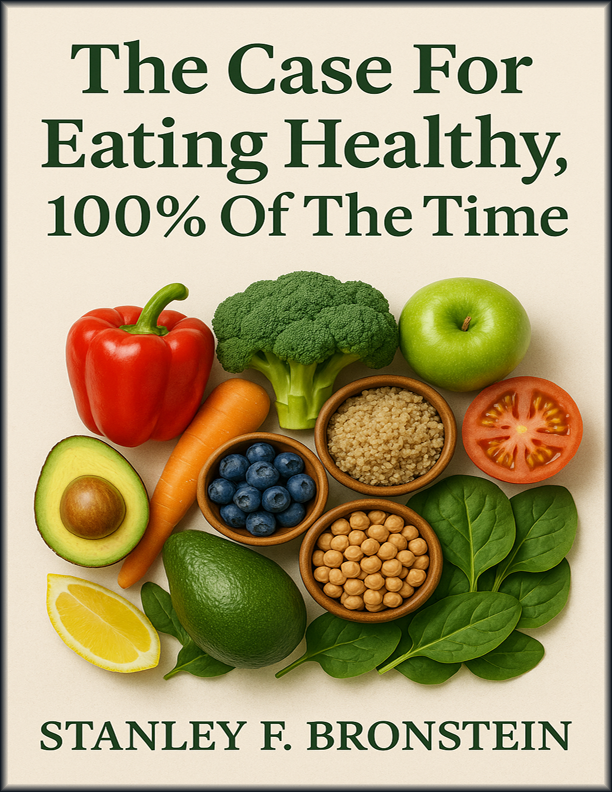
The Case For Eating Healthy 100% Of The Time
Why Eating Right,
ALL THE TIME,
Is The Most Powerful Choice You’ll Ever Make
By Stanley F. Bronstein – MPWLC Founder
Click The Tabs Below To Read Each Chapter Of The Book Online
Or
📘 Download Your Free Copy
The Case For Eating Healthy 100% Of The Time by Stanley F. Bronstein
Foreword
Foreword
There are moments in life when we realize that the choices we make—seemingly small, everyday decisions—are actually writing the story of our future. For many of us, food is one of those decisions we make multiple times a day without much thought. We eat what’s convenient, what’s comforting, or what’s culturally normal. We tell ourselves that a little indulgence “every now and then” won’t hurt.
But here’s the truth: every bite we take is a vote—for our health, for our environment, for our loved ones, and for the kind of life we want to live.
This book, The Case For Eating Healthy: Why Eating Right All the Time is the Most Powerful Choice You’ll Ever Make, is not about diets, fads, or deprivation. It’s about a bold, unwavering commitment to nourishing yourself in a way that fuels every aspect of your life. The author, Stanley F. Bronstein, doesn’t speak from theory—he speaks from lived experience. Once weighing 367 pounds, he transformed his health completely, losing over 220 pounds through simple, natural, sustainable choices. No surgeries. No pills. No gimmicks. Just a whole-food, plant-based lifestyle, walked out—literally—one step at a time.
Stanley’s story is proof that eating healthy 100% of the time is not an act of extremism—it’s an act of self-respect. It’s a statement that says, I will no longer negotiate with habits that harm me. But beyond that, it’s also a commitment to the bigger picture: a cleaner planet, a healthier society, stronger families, and a more sustainable economy.
If you let it, this book will challenge you. It will ask you to re-examine the stories you’ve been told about “balance,” “moderation,” and “treats.” It will help you understand the real cost of the Standard American Diet—not just to your waistline, but to your mind, your future, and the world you’ll leave behind. And most importantly, it will give you the tools, mindset, and encouragement to make this most powerful choice for yourself—permanently.
Whether you’re at the beginning of your health journey or looking to take it to the next level, this book will meet you where you are. It’s not about perfection—it’s about excellence. And excellence, as Stanley teaches, is a habit. One you can choose, right now, with your very next meal.
Prepare to see food—and your power to change your life—in a whole new light.
Introduction
Introduction
I used to think I understood what “eating healthy” meant. Like many people, I believed it was about balance—about eating well most of the time while “treating myself” now and then. After all, life is short, right? A slice of pizza here, some cake there… it wouldn’t hurt.
But here’s the thing: it did hurt. Not always immediately, but over time those little exceptions stacked up. Slowly, quietly, they became my norm. My “special occasions” became frequent habits. My health deteriorated. My weight climbed to 367 pounds. My energy plummeted. My body began to show signs of diseases I never wanted to face. And every time I tried to change, I told myself I could have just a little wiggle room. But that wiggle room always expanded until I was back where I started—or worse.
It wasn’t until I made a decision—a non-negotiable, no-compromise, 100% commitment to eating healthy—that everything changed. Not just my body. My mind. My relationships. My perspective on life itself. That choice, more than anything else I have ever done, became the most powerful decision I’ve made.
In this book, I’m going to make the case for why you should do the same. Not “most of the time.” Not “when it’s convenient.” Not “as soon as life settles down.” But now. All the time.
Eating healthy 100% of the time isn’t about punishment or perfectionism—it’s about freedom. It’s about never having to wrestle with guilt after a meal, never undoing weeks of progress with a single weekend, and never again feeling trapped by food cravings you can’t control. It’s about making choices that support your health, your values, and your future every single day, without exceptions that sabotage you.
This is not just a personal matter. The food choices you make ripple outward—to your family, to your community, to the planet. The way you eat affects the environment, the economy, the well-being of future generations. Eating healthy all the time is one of the simplest, most impactful actions you can take to improve not just your life, but the world around you.
Over the coming chapters, we’ll explore:
-
How a 100% commitment transforms your physical health, mental clarity, and emotional resilience.
-
The ways your diet influences your family’s habits, their health, and their future.
-
The profound environmental impact of what’s on your plate.
-
The economic consequences—personal and societal—of our collective food choices.
-
How to silence the common objections, from “It’s too extreme” to “What about special occasions?”
-
Practical strategies to make this way of eating realistic and sustainable for life.
This is more than a nutrition guide—it’s a blueprint for living in alignment with your highest values, with integrity and purpose. If you’re ready to take control of your health, protect the planet, inspire those around you, and step into the fullest version of yourself, then turn the page.
Because the truth is, you’re only one decision away from the healthiest, happiest, most empowered life you’ve ever known.
And it starts with what’s on your fork.
PART I – THE POWER OF 100% COMMITMENT
Part I – The Power of 100% Commitment
Every lasting transformation begins with a decision—one that leaves no room for negotiation. In the world of healthy eating, that decision is simple but not always easy: you either commit, or you compromise.
Most people try to walk the middle ground, eating “pretty healthy” most of the time while leaving the door open for exceptions. But the truth is, those exceptions add up quickly. They chip away at your results, drain your energy, and keep you trapped in a cycle of starting over again and again.
In this section, we’ll explore why going all-in—choosing to eat healthy 100% of the time—isn’t just possible, but actually easier and more freeing than living in the gray area. You’ll learn why “moderation” is one of the most dangerous myths in nutrition, what truly healthy eating looks like, and how making an unwavering commitment can change everything about your body, your mind, and your future.
Chapter 1 – The Myth of Moderation
Chapter 1 – The Myth of Moderation
If you’ve ever tried to eat better, you’ve probably heard the phrase:
“Everything in moderation.”
It sounds reasonable. It feels balanced. It’s the kind of advice that makes people nod in agreement at dinner parties. After all, who could argue with moderation? It’s not extreme. It’s not rigid. It gives you permission to enjoy life.
But here’s the problem: moderation almost never works—not in the long run.
It’s not that the concept is inherently bad. Moderation can make sense in some areas of life. But when it comes to food—especially in a modern world flooded with hyper-processed, hyper-palatable, addictive products—moderation is a trap. It’s a doorway that swings both ways: toward good choices, and back toward bad ones. And once you’ve opened it, the wrong direction becomes all too easy to slip into.
How “Moderation” Becomes the Slippery Slope
Moderation sounds harmless because it offers wiggle room.
“Just one piece of cake.”
“Just one slice of pizza.”
“Just one holiday binge.”
But here’s what really happens:
- The rare treat becomes a weekly habit.
- The special occasion becomes every weekend.
- The occasional indulgence becomes a crutch when life gets stressful.
And slowly—sometimes so slowly you don’t notice—it erodes your progress. It chips away at your confidence. It makes you feel like you’re trying, but not quite getting anywhere.
Why Moderation is Harder Than 100% Commitment
Most people think eating healthy 100% of the time would be harder than 90%. But in reality, 90% is harder.
Why? Because 90% means you have to make the decision over and over again—every time you’re faced with temptation.
- Do I eat this donut or not?
- Do I have dessert tonight or wait until the weekend?
- Have I “earned” this cheat meal?
Those little debates drain your mental energy. They create decision fatigue. And decision fatigue leads to bad choices.
When you commit 100%, the decision is already made. You don’t have to think about it. You don’t have to negotiate with yourself. You simply don’t eat the unhealthy thing—end of story. Paradoxically, it’s easier to be all-in than to be halfway in.
The Moderation Myth and Modern Food
When people talk about moderation, they imagine a world where “unhealthy” food is just grandma’s homemade pie or a scoop of ice cream on a hot summer day. But that’s not the reality most people live in anymore.
Today’s food industry has engineered products to be more addictive than ever before:
- Packed with sugar, salt, and fat in the exact ratios that trigger dopamine spikes in the brain.
- Stripped of fiber and nutrients so they digest quickly and leave you hungry sooner.
- Marketed to you relentlessly with images, smells, and emotional cues designed to make you crave them.
This isn’t about willpower. When you eat these foods “in moderation,” you’re constantly reigniting cravings. You’re training your brain to expect the pleasure hit again and again. That makes moderation harder to sustain than full commitment.
Why People Defend Moderation
Moderation feels appealing because it doesn’t require identity change. You can still be “someone who enjoys junk food sometimes.” You can still participate in the cultural rituals built around unhealthy eating without feeling like an outsider.
But here’s the truth: change requires identity shift.
If you want to be healthy, you have to stop identifying with your old habits. You have to stop telling yourself you’re “someone who loves fast food” or “someone who needs dessert.” You have to decide you’re someone who eats healthy—period.
The Real Risk of Moderation
Moderation doesn’t just slow your progress—it can erase it completely. You can undo weeks or months of healthy eating with a single weekend of indulgence. Not just in terms of calories, but in terms of inflammation, insulin sensitivity, gut health, and mental momentum.
When you break your streak, you break your rhythm. And once the rhythm is broken, it’s easy to spiral. That’s why so many diets fail—not because people don’t know what to do, but because they keep letting “just this once” become “just one more time.”
The Alternative: Excellence Over Moderation
This book isn’t about perfection—it’s about excellence. Excellence means doing the right thing all the time, not because you’re forced to, but because you’ve chosen to. It’s about aligning your daily actions with your long-term vision for your life, health, and legacy.
When you commit to eating healthy 100% of the time, you remove the guesswork. You shut the door to negotiation. You free yourself from the exhausting cycle of on-again, off-again eating. And in that freedom, you’ll find more energy, more confidence, and more results than you ever thought possible.
Your First Step
Before you go any further in this book, take a moment and ask yourself:
- Am I willing to make a choice once and for all?
- Am I willing to stop debating with myself every time temptation appears?
- Am I willing to leave moderation behind and step into excellence?
If your answer is “yes,” then you’ve already taken the most important step in this journey.
Chapter 2 – What Eating Healthy Really Means
Chapter 2 – What Eating Healthy Really Means
If you asked ten people to define “eating healthy,” you’d probably get ten different answers. Some would say it’s about eating low-fat. Others would swear by low-carb. Some would insist on counting calories, while others would point to organic labels as the gold standard.
The truth? Most people’s definition of healthy eating is vague, inconsistent, and influenced more by marketing than by science. And when the definition is fuzzy, it’s impossible to commit 100%.
To make the case for eating healthy all the time, we first have to define exactly what that means—and just as importantly, what it doesn’t mean.
Healthy Eating Is About Wholeness, Not Restriction
When most people think about “healthy eating,” they imagine it as a diet—a temporary set of rules that take things away. But eating healthy 100% of the time isn’t about restriction—it’s about abundance.
It’s about eating foods in their most natural, unprocessed form. It’s about filling your plate with things that are alive, vibrant, and nutrient-dense. It’s about giving your body what it needs to function at its absolute best, and removing what drags it down.
The Core Principles of Healthy Eating
In its simplest form, healthy eating means choosing foods that promote health and avoiding those that cause harm—every single time.
That means:
-
Whole Foods First – Foods that look like they did in nature: fruits, vegetables, legumes, whole grains, nuts, and seeds.
-
Minimal Processing – If it’s been heavily refined, stripped of nutrients, or loaded with additives, it’s not healthy.
-
Plant-Centered – The bulk of your calories should come from plants. This isn’t just for ethics or the environment—it’s for your health. Plants are rich in fiber, antioxidants, and phytochemicals that protect against disease.
-
Nutrient Density Over Calorie Density – Choose foods that deliver the most vitamins, minerals, fiber, and phytonutrients per calorie.
-
No Artificial Junk – Avoid artificial sweeteners, dyes, preservatives, and chemical flavor enhancers that your body doesn’t need.
What Healthy Eating Is NOT
It’s just as important to be clear on what healthy eating is not—because much of the “health food” sold today is anything but healthy.
Healthy eating is NOT:
-
Following Fads – Keto, paleo, juice cleanses, and detox teas might make headlines, but they’re rarely sustainable or balanced.
-
Starving Yourself – Cutting calories too low leads to nutrient deficiencies, muscle loss, and metabolic slowdown.
-
Eating “Cheat Meals” – If you need to “cheat” on your eating plan, that plan isn’t aligned with your life.
-
Basing Choices on Labels Alone – “Low-fat,” “high-protein,” “organic,” and “gluten-free” do not automatically mean healthy.
The Trap of “Healthier” Junk Food
One of the biggest pitfalls people face is thinking they’re eating healthy because they’ve replaced “bad” junk food with “better” junk food:
-
Organic cookies are still cookies.
-
Gluten-free cake is still cake.
-
Low-carb chips are still chips.
The difference might be marginal, but the addictive, calorie-dense, low-nutrient nature of these foods remains. If you want the benefits of eating healthy 100% of the time, you can’t just swap junk food for slightly less junky food—you have to leave it behind.
The Role of Plant-Based Eating
While this book isn’t about pushing a specific label—vegan, vegetarian, or otherwise—the research is overwhelming: diets high in whole, plant-based foods and low in animal products are consistently linked to better health outcomes.
That doesn’t mean you need to put a label on yourself. But it does mean that your daily plate should be overflowing with fruits, vegetables, legumes, and whole grains, with little to no room left for processed meats, refined dairy, or factory-farmed animal products.
The Power of Food as Fuel
Healthy eating isn’t just about avoiding disease—it’s about creating energy, clarity, and vitality. Think of your body as a high-performance engine. Every bite of food is either clean fuel that allows it to run smoothly, or dirty sludge that clogs it up and wears it down.
When you consistently feed your body clean, nutrient-rich food:
-
You think more clearly.
-
You move with more ease.
-
You recover faster from exercise and stress.
-
You feel younger, longer.
Why Clarity Matters
Without a clear, uncompromising definition of what “healthy eating” means to you, you’ll constantly be re-deciding what’s okay. That leads straight back to moderation, negotiation, and inconsistency.
Defining your standards now means you can live by them without hesitation. No more wondering if something “counts.” No more bargaining with yourself. You know what healthy is, you know what it isn’t, and you live accordingly.
Action Step
Right now, write down your personal definition of eating healthy—based on the principles in this chapter. Make it specific. Make it uncompromising. Make it something you can commit to 100% of the time.
The clearer you are, the stronger your commitment will be—and the more unstoppable your results.
Chapter 3 – My Journey: From 367 lbs to 143 lbs
Chapter 3 – My Journey: From 367 lbs to 143 lbs
People often look at me today—lean, healthy, full of energy—and assume I’ve always been this way. They might think I’m one of those naturally fit people who never had to struggle. The truth couldn’t be more different.
For much of my life, I was severely overweight. At my peak, I weighed 367 pounds. I was tired all the time, physically limited, and facing the looming threat of chronic illnesses that could shorten my life and rob me of the things I wanted to do.
I wasn’t lazy. I wasn’t ignorant. I knew about healthy eating. I’d read the articles, heard the advice, even tried to “eat better” countless times. But I always fell back into the same cycle: start strong, give myself “just one” indulgence, lose momentum, and slide right back to where I started—or worse.
The Moment Everything Changed
There wasn’t a single dramatic “rock bottom” moment. It was more like a gradual awakening—a realization that I was heading toward a future I didn’t want. I began to ask myself some uncomfortable but necessary questions:
-
What kind of life do I want ten years from now?
-
Will I be able to walk long distances, travel, and live independently?
-
Or will I be confined by my health, my weight, and my habits?
The answers scared me. But they also gave me clarity. I saw that if I kept doing what I was doing—dabbling in healthy eating but never committing fully—my life would get smaller, harder, and shorter.
That’s when I made the decision: No more moderation. No more “sometimes.” From now on, I eat healthy 100% of the time.
Starting From Where I Was
I didn’t sign up for an expensive program or buy into a fad diet. I didn’t count calories or weigh my food obsessively. Instead, I stripped everything back to basics:
-
Whole foods only – Fruits, vegetables, legumes, whole grains, nuts, and seeds.
-
No processed junk – If it came in a package with a long ingredient list, it didn’t go in my cart.
-
Plant-based focus – My meals centered on plants, not meat or dairy.
-
Consistency over perfection – I wasn’t chasing short-term results; I was building a permanent way of life.
I paired this with walking—at first just a mile or two a day, but over time building to 10+ miles daily. The walking gave me energy, cleared my mind, and accelerated my progress.
The Weight Came Off—And Stayed Off
The first 50 pounds came off steadily. Then another 50. My clothes fit differently. My energy improved. I could move in ways I hadn’t in years. By the time I’d lost 150 pounds, I knew this wasn’t a “diet”—it was simply who I had become.
Ultimately, I dropped from 367 pounds to 143 pounds—a total loss of 224 pounds. And here’s the part most people find hard to believe: I’ve kept it off, year after year, without white-knuckling it or feeling deprived.
Why? Because when you commit to eating healthy 100% of the time, there’s no mental tug-of-war. There’s no “on” and “off” switch. There’s just one way of eating—and it’s the one that makes you feel incredible.
The Ripple Effects I Never Expected
Yes, I lost the weight. Yes, I got my health back. But the benefits went far beyond my body:
-
My mental clarity skyrocketed.
-
My self-confidence returned.
-
I became a more positive influence on my friends, family, and community.
-
I discovered a deeper sense of purpose in helping others reclaim their health.
Why My Story Matters to You
I’m not special. I didn’t have elite trainers, personal chefs, or miracle genetics. What I had was a decision—and the discipline to stick with it.
The same transformation is possible for you. Not because you’ll follow my exact plan, but because you can adopt the same principles:
-
Define what healthy eating means to you.
-
Commit to it 100%.
-
Remove negotiation from the equation.
When you do that, the results will follow—not just on the scale, but in every area of your life.
A New Identity
Today, I no longer think of myself as “someone who used to be overweight.” I think of myself as a healthy person—someone who eats well all the time, moves daily, and lives in alignment with my values.
That’s the real secret: lasting change isn’t about willpower, it’s about identity. Once you become the kind of person who eats healthy 100% of the time, there’s no going back.
In the next section, we’ll dive deeper into why this commitment works so well—not just for your waistline, but for your overall health, your mind, your family, and even the planet. Because the power of this choice goes far beyond the individual.
Part II – THE PERSONAL BENEFITS
Part II – The Personal Benefits
When most people think about eating healthy, they think about weight loss. And yes—if you’re carrying excess weight, eating healthy 100% of the time will almost certainly bring the scale down.
But that’s just the tip of the iceberg.
The real magic happens when you experience the full spectrum of personal benefits—benefits that touch every part of your daily life. Your energy rises. Your sleep deepens. Your mood stabilizes. Your thinking sharpens. Your body heals. You begin to feel lighter not just physically, but mentally and emotionally.
In this section, we’ll explore how eating healthy all the time transforms your health from the inside out, unlocks freedom from food-related stress, and gives you the vitality to live fully. Because this isn’t about looking good for a moment—it’s about feeling good for life.
Chapter 4 – Transforming Your Health
Chapter 4 – Transforming Your Health
When you strip away all the marketing, all the fad diets, and all the conflicting advice, healthy eating really comes down to one truth: every bite you take is either moving you toward health or away from it.
The difference between eating healthy most of the time and eating healthy all of the time isn’t just a few extra calories or nutrients—it’s the difference between making progress and constantly undoing it.
The Body’s Remarkable Ability to Heal
Your body is a living, breathing repair machine. Every day, it replaces billions of cells, heals microscopic damage, and restores balance where it can. But it can only do this effectively if it has the right building blocks—and if it’s not constantly battling the damage caused by poor food choices.
When you eat healthy 100% of the time, you remove the constant stress of inflammatory, processed, and nutrient-depleted foods. Instead, you flood your body with vitamins, minerals, fiber, antioxidants, and phytonutrients that:
-
Reduce chronic inflammation
-
Stabilize blood sugar
-
Improve digestion and gut health
-
Strengthen the immune system
-
Enhance brain function and mood
Disease Prevention and Reversal
Decades of research confirm what many of us have experienced firsthand: a diet based on whole, plant-centered foods can prevent—and in some cases reverse—many of the leading causes of death.
Heart Disease – The #1 killer worldwide is largely preventable with a diet rich in fruits, vegetables, whole grains, legumes, and nuts, and low in saturated fats and cholesterol.
Type 2 Diabetes – High-fiber, nutrient-dense foods improve insulin sensitivity and help regulate blood sugar naturally.
Certain Cancers – Plant-based diets are associated with lower risks of cancers of the digestive tract, breast, and prostate.
Obesity – Whole foods tend to be lower in calorie density and higher in satiety, making it easier to maintain a healthy weight without counting calories.
When you make these foods the only foods you eat, you remove the dietary triggers that lead to disease in the first place.
Weight Loss as a Byproduct
Many people start their journey with weight loss as the goal. And yes—eating healthy 100% of the time almost always results in healthy, sustainable weight loss. But here’s the secret: weight loss becomes a side effect, not the main focus.
Instead of obsessing over the scale, you focus on nourishing your body. You eat when you’re hungry, stop when you’re full, and make choices that align with your health—not with short-term cravings. The weight comes off naturally and stays off because your habits are permanent.
Energy Like You’ve Never Felt Before
Imagine waking up without needing coffee to function. Imagine no mid-afternoon crash. Imagine having the energy to be active, play with your kids or grandkids, and still have stamina at the end of the day.
That’s not a fantasy—that’s what happens when your body runs on clean fuel 24/7. Your digestion improves, your blood sugar stabilizes, and your cells get the nutrients they need to operate efficiently. The result is steady, reliable energy all day long.
Better Sleep and Faster Recovery
When your diet supports rather than sabotages your health:
-
Your hormones regulate more naturally.
-
Your body repairs itself more efficiently at night.
-
Inflammation decreases, reducing aches and pains.
People are often surprised at how quickly their sleep quality improves once they stop consuming processed foods and excess sugar. Deep, restorative sleep becomes the norm instead of the exception.
The Compounding Effect
One healthy choice leads to another. You start walking more because you have more energy. You feel motivated to exercise because your body feels good. Your mood improves, which makes it easier to stay consistent. Over time, this creates a compounding effect—a snowball of health benefits that grows larger and more powerful the longer you stick with it.
Why 100% Matters
It’s tempting to think you can get these benefits with an “almost always healthy” diet. But the truth is, every time you bring in highly processed, inflammatory foods, you interrupt the healing process. You spike blood sugar, trigger cravings, and reintroduce the very conditions you’re trying to avoid.
When you commit to eating healthy all the time, you give your body the uninterrupted environment it needs to truly thrive.
Your Health Is the Foundation
You can have all the wealth, all the relationships, and all the achievements in the world—but if you don’t have your health, you can’t fully enjoy them. Eating healthy 100% of the time is one of the most powerful investments you can make in your future.
Everything else—your work, your family, your hobbies—rests on this foundation. And the beautiful part is, you have the power to strengthen it starting with your very next meal.
In the next chapter, we’ll move beyond the physical to explore another vital dimension of health transformation—the mental and emotional freedom that comes from ending the cycle of food guilt, cravings, and self-sabotage.
Chapter 5 – Unlocking Mental & Emotional Freedom
Chapter 5 – Unlocking Mental & Emotional Freedom
For years, I thought my battle with food was purely physical. I believed the problem was about calories, portion sizes, and exercise. But the truth was, much of the struggle was happening in my head.
Food was tied to my emotions—comfort when I was stressed, celebration when I was happy, distraction when I was bored. It was also tied to my self-image. Every time I broke a promise to myself about eating better, I chipped away at my self-respect.
The turning point came when I realized something powerful: the biggest benefit of eating healthy 100% of the time isn’t just what it does for your body—it’s the peace it gives your mind.
The End of Food Guilt
When you eat healthy all the time, you remove one of the biggest emotional burdens many people carry—guilt.
Think about the cycle most people live in:
-
Eat something they know isn’t healthy.
-
Feel guilty or disappointed in themselves.
-
Promise to “do better tomorrow.”
-
Repeat.
That cycle is exhausting. It erodes your confidence and keeps you trapped in a constant state of self-judgment.
When you commit 100%, that cycle ends. You eat, you feel good about your choice, and you move on with your day. No guilt. No self-loathing. Just peace.
Freedom from Cravings
Unhealthy foods are engineered to be addictive. They hijack your brain’s reward system, making you want more the moment you get a taste. This is why moderation feels like a never-ending struggle—it keeps those cravings alive.
When you stop eating these foods completely, something amazing happens:
-
The cravings lose their power.
-
The “pull” of unhealthy food fades over time.
-
You start to actually crave healthy foods instead.
Your taste buds adapt. Your brain chemistry resets. And what used to be irresistible starts to seem unappealing.
No More Decision Fatigue
Eating “pretty healthy” means you’re constantly negotiating with yourself:
-
Should I have dessert tonight?
-
Have I been “good enough” this week to earn a cheat meal?
-
Can I splurge at this party if I eat well tomorrow?
These decisions drain mental energy. The more you have to think about food, the more exhausting it becomes to stay consistent.
When you commit to eating healthy 100% of the time, the decision is already made. You never have to bargain with yourself again. That mental space frees you to focus on things that truly matter.
A Stronger Sense of Self-Respect
Every time you follow through on a promise to yourself, you reinforce your self-respect. Every time you break one, you weaken it.
By sticking to healthy eating all the time, you prove to yourself—over and over—that you can be trusted to act in your own best interest. That creates a deep, unshakable sense of confidence. And it spills over into every area of life: relationships, work, personal growth.
Emotional Stability
When you eat healthy all the time, your blood sugar stays steady, your brain chemistry stabilizes, and your mood becomes more even. That means:
-
Fewer emotional crashes.
-
Less irritability.
-
Better stress resilience.
You’re no longer on a rollercoaster of sugar highs and crashes, caffeine jolts and withdrawals. Instead, you’re grounded, calm, and consistent.
Food as Empowerment, Not Escape
For most of my life, food was a way to escape discomfort. Now, it’s a way to empower myself. Every meal is an act of self-care. Every bite is a vote for the life I want to live.
When you shift your relationship with food from escape to empowerment, you stop feeling like a victim of your cravings and start feeling like the driver of your own life.
The Emotional Ripple Effect
This kind of mental and emotional freedom doesn’t just help you—it helps everyone around you. When you’re calmer, more confident, and more in control, you show up better for your family, friends, and colleagues. You become a source of stability and inspiration.
Your Mind Is Now Your Ally
When you remove guilt, cravings, decision fatigue, and self-doubt, your mind stops working against you and starts working for you. That’s when transformation accelerates—because now, both your body and your brain are aligned with your goals.
In the next chapter, we’ll take this momentum and explore how eating healthy 100% of the time supercharges not just your health and mindset, but your physical performance and daily vitality—so you can live life with energy to spare.
Chapter 6 – Peak Performance & Daily Vitality
Chapter 6 – Peak Performance & Daily Vitality
What if you could wake up every day with energy to spare—without needing coffee to get going, without the afternoon crash, and without dragging yourself through the evening?
What if your body felt strong and capable enough to handle whatever life throws at you—whether it’s a busy workday, a weekend hike, or playing with your kids or grandkids?
That’s not a fantasy. It’s what happens when your body runs on clean, nutrient-rich fuel 100% of the time.
Food as Fuel, Not Just Calories
Most people think of food in terms of calories—energy in, energy out. But real performance comes from the quality of that energy, not just the quantity.
Highly processed foods are like cheap gasoline—they burn quickly, create excess buildup, and damage the engine over time. Whole, nutrient-dense foods are like premium fuel—they burn clean, last longer, and keep the engine running at peak efficiency.
When you eat healthy all the time, you’re giving your body:
-
Steady energy release from complex carbohydrates and fiber.
-
Sustained muscle function from clean protein sources.
-
Efficient recovery from antioxidants and anti-inflammatory nutrients.
Stable Energy All Day
When you fuel yourself with whole foods, your blood sugar rises slowly and steadily, instead of spiking and crashing. That means:
-
No mid-morning slump.
-
No “3 p.m. crash.”
-
No desperate search for a sugar or caffeine hit to keep going.
Instead, your energy stays consistent from morning to night—so you can focus, work, and move without constant fatigue.
Physical Endurance
Whether you’re walking, running, cycling, or doing any physical activity, endurance depends on efficient fuel use. Processed foods and sugary snacks can give you a quick boost, but they don’t sustain performance—and often lead to an energy crash before you’re done.
A diet of whole, plant-centered foods builds endurance naturally. The high nutrient content helps your muscles recover faster, reduces inflammation, and improves oxygen delivery to your cells. Over time, you don’t just have energy for daily tasks—you have energy for more life.
Faster Recovery
Everyday movement—and especially exercise—creates microscopic damage in your muscles and tissues. Recovery is when your body repairs and strengthens those tissues.
When you eat healthy 100% of the time, you’re constantly providing the raw materials for that repair process:
-
Antioxidants from fruits and vegetables reduce oxidative stress.
-
Omega-3 fats from flax, chia, hemp, and walnuts reduce inflammation.
-
Amino acids from beans, lentils, and whole grains rebuild muscle tissue.
Faster recovery means you can be more active, more often, without overtraining or injury.
Sharper Mental Performance
Peak performance isn’t just physical—it’s mental. Your brain uses about 20% of your daily energy intake, and it runs best on steady, clean fuel.
When you eat healthy all the time:
-
Your focus lasts longer.
-
Your memory improves.
-
Your mood stays balanced.
-
Your decision-making gets sharper.
This is why professional athletes, entrepreneurs, and high performers often place such a high priority on nutrition—it directly affects their ability to think and act at their best.
Ageless Vitality
One of the most overlooked benefits of eating healthy 100% of the time is how it slows the physical decline we often accept as “just aging.”
Many of the aches, stiffness, fatigue, and cognitive slowdowns we associate with age are actually the result of decades of poor diet. When you remove the foods that accelerate this decline and replace them with foods that protect and restore your body, you don’t just live longer—you live better.
The Freedom to Live Fully
Energy and performance aren’t just about work and exercise—they’re about life. They’re about having the freedom to say “yes” to the things you want to do without hesitation. To travel without worrying about keeping up. To play with your kids or grandkids without getting winded. To take on new challenges without wondering if your body can handle it.
The 100% Difference
Eating healthy most of the time might give you small bursts of performance. But only when you eat healthy all of the time do you remove the constant interruptions to your energy, recovery, and mental sharpness.
Your body becomes a high-functioning, well-maintained machine—and you’re the one behind the wheel.
In the next section, we’ll see how the benefits of eating healthy 100% of the time extend far beyond your own body and mind—transforming your family, your community, and even the planet.
Part III – THE RIPPLE EFFECTS
Part III – The Ripple Effects
The benefits of eating healthy 100% of the time don’t stop with you. In fact, once you commit fully, you’ll quickly see that your choices have a far greater reach than you ever imagined.
The meals you make influence the habits of your children. The example you set inspires friends, coworkers, and neighbors. The food you buy supports (or challenges) the health of your community. And collectively, our eating patterns shape the health of the planet itself.
When you eat healthy all the time, you’re not just making a personal choice—you’re making a social, environmental, and economic statement. You’re casting a vote for the kind of world you want to live in and the kind of future you want to pass on.
In this section, we’ll explore the ripple effects of your food choices—how they strengthen your family, heal society, and protect the Earth. Because when one person chooses to eat healthy 100% of the time, it’s not just a private win—it’s a public good.
Chapter 7 – Strengthening Your Family
Chapter 7 – Strengthening Your Family
When most people think about the impact of their eating habits, they think about themselves—their health, their weight, their energy. But the truth is, the people most affected by your food choices are often the ones sitting across from you at the dinner table.
Whether you realize it or not, every meal you prepare, every snack you choose, and every example you set sends a message to your family about what “normal” eating looks like.
You Are the Role Model
If you have children or grandchildren, they’re watching you far more than they’re listening to you. You can tell them to eat their vegetables, but if you’re eating fast food or soda, that’s the behavior they’ll remember and imitate.
When you eat healthy 100% of the time, you send a powerful, consistent message:
“This is how we take care of our bodies. This is how we live well.”
Over time, those messages become habits that can last a lifetime.
Healthy Traditions Replace Unhealthy Ones
Families often bond over food—but many of those traditions revolve around unhealthy choices: pizza nights, sugary holiday desserts, fast-food runs after sports practice.
Changing those traditions doesn’t mean losing family time—it means upgrading it. Imagine:
-
Taco nights with whole-grain tortillas, black beans, fresh salsa, and avocado.
-
Holiday spreads loaded with colorful roasted vegetables, fresh salads, and whole-grain sides.
-
Weekend breakfasts of oatmeal topped with fresh fruit and nuts instead of processed pastries.
When healthy food becomes part of the family’s cherished moments, you create traditions that nourish instead of harm.
Reducing the Caregiving Burden
Poor eating habits lead to chronic illnesses that can require years—sometimes decades—of caregiving from family members. By taking care of your health now, you’re not only improving your own quality of life, you’re sparing your loved ones from the emotional, physical, and financial strain of caring for a sick relative.
Eating healthy 100% of the time is an act of love for your future self and for the people who care about you.
Empowering the Next Generation
Kids who grow up eating healthy foods are more likely to:
-
Maintain a healthy weight as adults.
-
Avoid chronic diseases later in life.
-
Have better academic performance and behavior in school.
-
Develop a positive relationship with food.
This isn’t about perfection or forcing anyone into strict rules—it’s about making healthy eating so normal that it doesn’t feel like a chore or a punishment.
The Emotional Bond of Cooking Together
Cooking healthy meals as a family can be an opportunity for connection. It’s a chance to teach skills, share stories, and spend time together without screens or distractions. Kids who help prepare meals are more likely to try and enjoy new foods—especially vegetables.
Breaking the Cycle
For many families, poor eating habits are generational. We inherit recipes, preferences, and portion sizes from our parents, who got them from theirs. These patterns can carry forward obesity, diabetes, and heart disease like a family heirloom nobody wants but everyone keeps passing down.
When you commit to eating healthy 100% of the time, you break that cycle. You become the person who changes the family story—and sets a new, healthier standard for the generations that follow.
The Legacy You Leave
The food choices you make today will echo into the future—through your children’s habits, your family’s health, and even your great-grandchildren’s genes. Science shows that lifestyle choices can influence gene expression for multiple generations.
In other words, by eating healthy now, you’re not just improving your own life—you’re potentially improving the lives of people who haven’t even been born yet.
It Starts With One
Change in a family doesn’t have to be unanimous to begin. You don’t need everyone on board from day one. You just need one committed person to lead by example. Over time, consistency speaks louder than any lecture ever could.
And when they see you looking and feeling better, the influence will spread.
In the next chapter, we’ll widen the circle even further to explore how eating healthy all the time isn’t just a family matter—it’s a social act that can help heal communities and inspire cultural change.
Chapter 8 – Healing Society from the Inside Out
Chapter 8 – Healing Society from the Inside Out
When you decide to eat healthy 100% of the time, it might feel like a deeply personal choice. And in one sense, it is—it’s about your health, your energy, your future.
But personal choices don’t happen in isolation. They ripple outward, influencing the people around you and contributing to the health—or sickness—of the society we all share.
The Scale of the Problem
Our modern diet is fueling a health crisis of staggering proportions:
-
Rising rates of obesity, type 2 diabetes, heart disease, and certain cancers.
-
Billions of dollars in healthcare costs each year—most of it spent treating preventable conditions.
-
Lower productivity due to illness, fatigue, and chronic pain.
The standard diet doesn’t just shorten lives—it reduces the quality of life for millions and drains resources that could be used for education, infrastructure, and community development.
Healthy Individuals Make Healthy Communities
When you commit to eating healthy all the time, you’re not just improving your personal odds—you’re contributing to a healthier population. And healthier populations:
-
Have lower healthcare costs.
-
Are more productive at work.
-
Require fewer resources to manage chronic disease.
-
Have higher quality of life and life expectancy.
The math is simple: the more people in a community who live healthfully, the stronger that community becomes—economically, socially, and culturally.
The Power of Leading by Example
You don’t have to be a doctor, teacher, or community leader to influence others. Your example can inspire change in ways you may never see.
When friends and coworkers notice you have more energy, look healthier, and seem happier, they get curious. They ask questions. They start to wonder what’s possible for them.
This creates a ripple effect—one person’s transformation can inspire dozens more, and those dozens can influence hundreds.
Shifting Cultural Norms
Societal habits are shaped by what’s considered “normal.” Right now, normal means:
-
Fast food on every corner.
-
Sugary drinks as a default beverage.
-
Highly processed snacks in every meeting, break room, and school event.
But “normal” is not fixed—it changes when enough people adopt a new standard. By consistently choosing healthy foods, you help redefine what’s normal in your circles. Over time, this shifts demand in grocery stores, menus, and food marketing.
Reducing the Stigma of Healthy Eating
Many people see healthy eating as boring, expensive, or elitist. When you live it joyfully and share it generously, you challenge those stereotypes. You show that healthy food can be delicious, affordable, and accessible.
This matters—because when healthy eating feels inclusive, more people are willing to try it.
A Society That Values Health Over Convenience
Right now, convenience is king. We’ve built a culture that prioritizes speed and low cost over long-term well-being. The result? A society that’s overfed and undernourished.
When enough people choose health over convenience, the market responds. Businesses adapt. Schools improve their food offerings. Farmers shift production toward healthier crops. This isn’t theoretical—it’s how consumer demand has always shaped industry.
The Social Multiplier
Economists use the term multiplier effect to describe how one change in spending can create a ripple of economic activity. Health works the same way.
One healthy person can:
-
Inspire others to make better food choices.
-
Reduce strain on the healthcare system.
-
Contribute more actively to community life.
When that pattern repeats across thousands or millions of people, society changes.
It Starts with Everyday Choices
Healing society doesn’t happen through a single dramatic action—it happens through consistent, everyday choices made by individuals who decide they will not compromise their health.
And the good news is, you don’t need to convince everyone. You just need to live your example with such integrity and energy that others can’t help but notice.
In the next chapter, we’ll expand this ripple effect even further—beyond individual health, beyond societal well-being—to the health of the planet itself. Because what’s on your plate doesn’t just affect you and your community—it affects the Earth we all share.
Chapter 9 – Protecting the Planet
Chapter 9 – Protecting the Planet
We often think of eating as a personal act—something that begins and ends with our own plate. But the truth is, every bite of food has a story. It comes from somewhere, it’s grown or raised in a certain way, it travels through a system to reach you, and it leaves an environmental footprint long after you’ve eaten it.
When you choose to eat healthy 100% of the time—especially whole, minimally processed, plant-centered foods—you’re not just nourishing your body. You’re making a powerful choice for the planet.
The Hidden Cost of What’s on Your Plate
Food production is one of the largest drivers of environmental damage worldwide. Consider:
-
Deforestation – Clearing forests for cattle grazing and animal feed crops destroys habitats and reduces the Earth’s capacity to absorb carbon dioxide.
-
Greenhouse Gas Emissions – Livestock production generates significant methane and nitrous oxide, both potent greenhouse gases.
-
Water Use – Animal agriculture consumes vast amounts of water compared to growing plants for direct human consumption.
-
Pollution – Fertilizers, pesticides, and animal waste runoff contaminate rivers, lakes, and oceans.
The global food system is responsible for about one-quarter of all human-caused greenhouse gas emissions.
Why Plant-Centered Eating Matters
Eating a diet rich in whole plant foods is one of the most effective ways to reduce your personal environmental footprint. Research shows that shifting even part of our diets toward plant-based eating can:
-
Cut food-related greenhouse gas emissions by up to 70%.
-
Reduce land use by 75%.
-
Save hundreds of thousands of gallons of water per person per year.
When you make that shift 100%, the impact is even greater—and it happens every single day, with every single meal.
Less Processing, Less Waste
Highly processed foods don’t just harm your health—they require more energy, packaging, and transportation. Every extra step between the farm and your fork adds to the environmental cost.
Whole foods, on the other hand, often come with less packaging, require fewer industrial steps, and can be sourced locally or regionally to reduce transportation emissions.
Supporting Sustainable Agriculture
When you choose whole, healthy foods, you support farming practices that are more likely to be sustainable. This can mean:
-
Crop diversity instead of monocultures that strip the soil.
-
Reduced reliance on synthetic pesticides and fertilizers.
-
Farming methods that preserve ecosystems and biodiversity.
Your purchasing choices send a message to producers and retailers about the kind of agriculture you want to support.
Food Waste Reduction
Healthy eating often means buying fresh, whole ingredients and using them intentionally. This naturally reduces waste. And since food waste is a major contributor to methane emissions in landfills, even small reductions make a difference.
When you value your food, you’re more likely to store it properly, cook it creatively, and make sure it’s eaten rather than thrown away.
Leaving a Legacy
The environmental impact of our food choices isn’t just about the present—it’s about the future. The Earth we leave behind will be the home of our children, grandchildren, and generations we’ll never meet.
By eating healthy 100% of the time, you align your personal health with the planet’s health. You become part of a growing movement that recognizes that caring for our bodies and caring for our Earth are not separate goals—they’re the same goal, seen from two different perspectives.
The Big Picture
Protecting the planet can feel overwhelming. Climate change, deforestation, and pollution are massive issues. But your daily eating habits are one of the most immediate, tangible ways you can make a difference—no protest signs, no political debates, no waiting for policy changes.
It’s as simple as what you put on your plate, three times a day, every day.
In the next part of the book, we’ll shift from the social and environmental ripple effects to the economic case for eating healthy all the time—because the way we eat not only shapes our bodies and our planet, but also our wallets and the financial health of our communities.
Part IV – THE ECONOMIC ARGUMENT
Part IV – The Economic Argument
When most people think about eating healthy, they see it as a cost—fresh produce, whole grains, and high-quality ingredients can seem more expensive than fast food or processed snacks. But that’s only looking at the price tag at the checkout line.
The real cost of unhealthy eating isn’t in your grocery bill—it’s in your medical bills, your lost productivity, and the opportunities you miss when your health holds you back. It’s in the strain placed on healthcare systems, the billions of dollars spent treating preventable diseases, and the economic drag caused by a sick and fatigued population.
Eating healthy 100% of the time is not just a personal investment—it’s one of the smartest financial decisions you can make, both for yourself and for society as a whole. In this section, we’ll break down how this choice saves you money in the long run, strengthens local economies, and eases the burden on national healthcare systems.
Because when you see the numbers, the case becomes crystal clear: the price of eating unhealthy is far higher than the price of eating well.
Chapter 10 – Personal Financial Wins
Chapter 10 – Personal Financial Wins
One of the most common objections to eating healthy is, “It’s too expensive.” People look at the price of fresh produce or organic whole foods and compare it to a value meal at a fast-food drive-through—and they think the cheaper option is saving them money.
But here’s the truth: unhealthy eating is far more expensive in the long run—not just in dollars, but in lost health, lost productivity, and lost opportunities.
When you choose to eat healthy 100% of the time, you create financial wins that go far beyond your weekly grocery bill.
Lower Healthcare Costs
Poor diet is a leading cause of chronic illness, from type 2 diabetes to heart disease to certain cancers. Managing these conditions often means:
-
Frequent doctor visits
-
Expensive prescriptions
-
Medical procedures or surgeries
-
Time away from work due to illness
Eating healthy all the time dramatically reduces your risk of these diseases—and in many cases, can help reverse them. That translates into thousands, even tens of thousands, of dollars saved over a lifetime.
Fewer Sick Days, More Productivity
Every day you miss work because you’re sick is a day you’re not earning or producing. Even if you’re self-employed, lost time is lost opportunity.
When you fuel your body with nutrient-rich, whole foods, your immune system is stronger, your energy levels are steadier, and you recover from illness faster. That means fewer days lost to colds, flu, or fatigue—and more days spent doing what matters to you.
Cutting Out the Hidden Food Costs
Unhealthy eating often includes:
-
Fast-food stops
-
Restaurant takeout
-
Snack and soda purchases throughout the week
These “small” expenses add up quickly. Replacing them with home-prepared meals built on affordable whole foods—beans, lentils, rice, oats, seasonal fruits, and vegetables—can save hundreds of dollars a month.
The Myth of “Cheap” Junk Food
Highly processed foods may be cheap at the register, but they’re costly for your body. They’re designed to keep you hungry, leading to overeating and higher food consumption overall.
Whole, nutrient-dense foods keep you fuller for longer. That means you eat less often, waste less food, and spend less money on constant snacking.
Avoiding the High Price of “Diet Hopping”
Many people spend thousands on:
-
Weight loss programs
-
Meal replacement shakes
-
Specialty supplements
-
Gym memberships they barely use
These costs often repeat because the results don’t last. But when you commit to eating healthy 100% of the time, you’re not buying into a temporary fix—you’re building a permanent lifestyle. That means you stop the cycle of starting over and paying for it all again.
Energy Equals Earning Power
When your energy is high and steady, you’re able to work more effectively, take on bigger challenges, and even pursue opportunities you might otherwise avoid due to fatigue or poor health. Over time, that increased earning capacity is one of the biggest financial wins of all.
A Long-Term Investment with Lifetime Returns
Think of eating healthy all the time as a form of preventive insurance. Instead of paying premiums to cover future illness, you’re investing in habits that reduce the chances you’ll need that coverage in the first place.
The “dividends” of this investment aren’t just financial—they’re measured in years of health, mobility, and independence that you gain.
Your Money or Your Life
We live in a world where it’s easy to trade long-term well-being for short-term savings. But the truth is, you will either pay for your health now—through time, attention, and quality food—or you will pay for it later in medical bills, lost productivity, and diminished quality of life.
When you look at it that way, eating healthy 100% of the time isn’t expensive—it’s one of the smartest financial moves you can make.
In the next chapter, we’ll zoom out from your personal finances to the bigger picture—how widespread healthy eating could save nations billions of dollars, strengthen economies, and improve the well-being of entire populations.
hapter 11 – National & Global Economic Benefits
Chapter 11 – National & Global Economic Benefits
When you eat healthy 100% of the time, the financial benefits to you are substantial. But if millions—or billions—of people made the same choice, the economic impact would be staggering.
Unhealthy eating is not just a personal health issue—it’s one of the largest economic drains in the world today. By changing what we put on our plates, we could transform healthcare systems, national productivity, and even the stability of global economies.
The High Price of Poor Diets
Globally, poor diets are responsible for more deaths each year than smoking. The economic toll is equally devastating:
-
Healthcare Costs – In the U.S. alone, diet-related diseases account for hundreds of billions of dollars annually in direct medical expenses.
-
Lost Productivity – Sick days, disability, and reduced work performance cost employers—and economies—billions more.
-
Social Services Strain – Chronic illness drives up costs in disability payments, long-term care, and other support systems.
Much of this spending is reactive—money used to manage preventable conditions instead of preventing them in the first place.
The Healthcare System Relief
Imagine the effect if just half the population adopted healthy eating 100% of the time:
-
Rates of obesity, type 2 diabetes, and heart disease would plummet.
-
Hospitals could focus more on emergencies and less on managing chronic conditions.
-
Health insurance costs could drop for both individuals and businesses.
This isn’t wishful thinking—it’s the logical result of removing the primary causes of so many preventable diseases.
A Stronger, More Productive Workforce
A healthier population means:
-
Fewer sick days
-
Higher energy and focus at work
-
Longer careers without the early retirement often caused by poor health
-
Lower absenteeism and turnover rates
The ripple effect? Stronger businesses, more innovation, and increased competitiveness in the global economy.
Shifting Economic Priorities
When consumer demand shifts toward healthy, whole foods:
-
Farmers and food companies have incentive to produce more nutrient-rich crops.
-
The food supply becomes more diverse, sustainable, and locally sourced.
-
Resources currently spent on producing and marketing junk food can be redirected toward health-promoting products.
This shift can revitalize local agriculture, create jobs in healthy food production, and stimulate new markets for sustainable food technologies.
Global Impact
Poor diets aren’t just a problem in wealthy nations—they’re a growing crisis worldwide. In many countries, traditional, nutrient-rich diets are being replaced by ultra-processed foods, leading to skyrocketing rates of obesity and related diseases.
Global adoption of healthy eating could:
-
Reduce healthcare burdens in developing nations before they reach crisis levels.
-
Lower global greenhouse gas emissions from food production.
-
Improve food security by using land and resources more efficiently.
Economic Resilience
Healthy populations are more resilient to economic shocks. They recover from illness faster, adapt better to changing job demands, and place less strain on government safety nets. In a world facing frequent disruptions—from pandemics to climate change—this resilience is priceless.
From Reactive to Proactive
Right now, most nations operate on a reactive health model: wait for people to get sick, then spend enormous resources treating them.
A population committed to healthy eating flips the model to proactive health: prevent illness before it starts. This is not just better for people—it’s far more cost-effective for economies.
The Big Picture
Changing our diets isn’t just a personal health choice—it’s a form of economic activism. Every healthy meal is a small act that, multiplied across millions of people, could free up billions of dollars, strengthen communities, and improve global stability.
When you eat healthy 100% of the time, you’re not just investing in your own future—you’re helping to build a healthier, more prosperous world.
In the next part of the book, we’ll address the pushback you may face when living this way. We’ll tackle the most common objections—“I don’t want to give up everything,” “It’s too extreme,” and “What about social situations?”—and show you exactly how to overcome them.
Part V – OVERCOMING THE RESISTANCE
Part V – Overcoming the Resistance
By now, you understand the case for eating healthy 100% of the time—how it transforms your health, boosts your energy, strengthens your family, benefits society, protects the planet, and even makes financial sense.
But knowing why is only part of the battle. The real challenge comes when you start living it—and the world pushes back. Friends will tell you to “just live a little.” Family will insist that “one bite won’t hurt.” You might even hear the little voice in your own head whispering, Do you really need to be this strict?
This is where your resolve is tested—not just by temptation, but by cultural norms, social pressure, and old habits trying to pull you back.
In this section, we’ll tackle the three most common objections you’ll hear (and sometimes think yourself):
-
“I don’t want to give up everything.”
-
“It’s too extreme.”
-
“What about social situations?”
You’ll learn why these objections are so common, why they’re based on misconceptions, and how to address them with clarity, confidence, and grace—without feeling deprived, defensive, or isolated.
Because once you understand how to handle resistance, nothing can shake your commitment.
Chapter 12 – “But I Don’t Want to Give Up Everything
Chapter 12 – “But I Don’t Want to Give Up Everything”
If there’s one objection I’ve heard more than any other, it’s this:
“I want to eat healthier, but I don’t want to give up everything I enjoy.”
It’s a natural response. Food isn’t just fuel—it’s tied to memories, traditions, comfort, and pleasure. The idea of removing certain foods permanently can feel like a loss, even before you take the first step.
But here’s the reality: what you’re giving up is far less valuable than what you’re gaining.
The Illusion of Pleasure
Most of the foods people are afraid to “give up” are engineered for quick pleasure, not lasting satisfaction. The sugar rush, the salty crunch, the creamy indulgence—they all light up the brain’s reward system for a few fleeting moments.
But what comes after?
-
The crash.
-
The guilt.
-
The cravings for more.
That’s not real pleasure—it’s a cycle of temporary highs followed by inevitable lows.
When you commit to eating healthy 100% of the time, you break that cycle. The pleasure you get from food becomes clean, steady, and free from regret.
Gaining More Than You Lose
Let’s reframe the question. Instead of asking, “What will I lose if I stop eating this?”, ask:
-
What will I gain in energy?
-
What will I gain in health?
-
What will I gain in freedom from cravings?
-
What will I gain in years of life?
The foods you “give up” are replaced by foods that nourish you, sustain you, and make you feel better—not just in the moment, but all day, every day.
The Taste Bud Transformation
One of the most surprising things that happens when you stop eating unhealthy foods is how your taste buds change. Within a few weeks, you begin to notice:
-
Fruits taste sweeter.
-
Vegetables have richer flavors.
-
Processed foods start tasting artificial or overly salty.
Your brain recalibrates to appreciate the natural flavors of whole foods. What once felt like deprivation becomes genuine enjoyment.
Traditions Can Evolve
Many people fear that giving up certain foods means losing cherished family traditions—holiday desserts, birthday cake, or favorite restaurant outings. But traditions are about people and connection, not just what’s on the plate.
With a little creativity, you can adapt traditions to include healthier versions of those foods—or create entirely new traditions that align with your values and health goals.
The Real “Everything”
When people say, “I don’t want to give up everything,” what they often mean is, “I don’t want to give up comfort, convenience, and familiarity.”
But here’s the truth:
-
Comfort can come from feeling good in your body.
-
Convenience can be found in quick, healthy meals you prepare ahead.
-
Familiarity can be redefined—today’s “new” foods will become tomorrow’s comfort foods.
Loss vs. Liberation
At first, you may feel like you’re losing something. That’s normal—it’s part of the transition. But over time, what felt like loss turns into liberation.
You’re no longer controlled by cravings.
You’re no longer on the rollercoaster of indulgence and regret.
You’re no longer sacrificing your future health for a few minutes of taste.
That’s not giving up everything—that’s gaining everything that matters.
A Challenge for You
Make a list of the foods you think you “can’t” give up. Then next to each one, write:
-
How you feel immediately after eating it.
-
How you feel two hours later.
-
What it might be costing you in health, energy, or self-respect.
When you look at that list honestly, you’ll start to see that the trade-off isn’t as painful as you once believed.
In the next chapter, we’ll tackle the second big objection: “It’s too extreme.” We’ll examine why society labels consistent healthy eating as “extreme,” and why the real extreme is the way most people are eating today.
Chapter 13 – “It’s Too Extreme”
Chapter 13 – “It’s Too Extreme”
When you tell people you eat healthy 100% of the time, you’ll often get a raised eyebrow, a smirk, or the comment:
“That’s a little extreme, don’t you think?”
At first, you might feel defensive. After all, you’re making a choice that improves your health, protects the planet, and saves money in the long run. But in a world where unhealthy eating is the norm, choosing not to participate in that norm looks unusual.
Here’s the truth: what’s considered “normal” in our society is actually the extreme.
The Real Extreme
Think about the standard modern diet:
-
Breakfast pastries and sugary coffee drinks
-
Processed snacks between meals
-
Fast food for lunch or dinner
-
Sugary drinks and desserts every day
This “normal” way of eating is loaded with refined sugar, excess salt, unhealthy fats, and chemicals your body doesn’t need. It’s a diet that leads directly to obesity, type 2 diabetes, heart disease, and other chronic conditions that kill millions of people every year.
That’s not moderate. That’s not balanced. That’s extreme self-damage—so common that we’ve stopped noticing it.
Why Healthy Looks Extreme
When unhealthy eating is the majority behavior, healthy eating becomes the minority behavior. And in human psychology, the minority often gets labeled as “radical” or “fanatical”—not because it’s wrong, but because it’s different.
It’s the same in any area of life:
-
The person who saves 50% of their income is called “obsessive” by people living paycheck to paycheck.
-
The person who exercises daily is called “addicted” by those who rarely move.
-
The person who avoids alcohol is called “boring” by those who drink regularly.
The label “extreme” often says more about the speaker’s comfort zone than about your choices.
The Health Math
Eating healthy 100% of the time isn’t extreme—it’s logical. The science is clear:
-
Unhealthy diets are the leading cause of premature death worldwide.
-
Even small amounts of processed meat, refined sugar, and trans fats increase disease risk.
-
Chronic inflammation from poor diet is linked to nearly every major degenerative condition.
Given those facts, continuing to eat unhealthy food—even “in moderation”—is the irrational choice.
Extreme Outcomes vs. Extreme Effort
People fear that eating healthy all the time requires extreme effort. But the effort comes mostly in the beginning, as you build new habits and navigate social pressures. Once it’s part of your identity, it’s no harder than brushing your teeth every day.
The real “extreme” outcomes are the ones you’re avoiding:
-
Open-heart surgery
-
Amputations from diabetes
-
Lifelong dependence on medications
-
Losing years of active life to disability
Those are the true extremes—and they’re far more painful than adjusting your grocery list and meal planning.
The Power of Reframing
Instead of thinking, “I’m living in an extreme way,” try:
“I’m living in a way that gives me the best possible chance for a long, healthy life.”
Instead of defending your choice, state it simply and with confidence. You don’t need to justify your desire to thrive.
Leading by Quiet Example
Arguing with people who call your lifestyle extreme rarely changes their mind. What does?
-
Seeing you consistently healthy, energized, and happy.
-
Watching you handle stress, illness, and aging better than most.
-
Realizing you’ve been living this way for years without burnout or regret.
Over time, what seemed extreme to them may start to look like common sense.
The Bottom Line
In a world where unhealthy is normal, healthy will always look extreme—until enough people do it. Then it becomes the new normal.
And when you eat healthy 100% of the time, you’re not just protecting yourself—you’re helping move society toward that new normal.
In the next chapter, we’ll tackle the third major objection: “What About Social Situations?” You’ll learn how to navigate gatherings, restaurants, holidays, and celebrations without feeling deprived—or making anyone else feel judged.
Chapter 14 – “What About Social Situations?”
Chapter 14 – “What About Social Situations?”
Even if you’re rock-solid in your personal commitment to eat healthy 100% of the time, you’ll eventually face the question:
“What happens when you’re at a party, a restaurant, or a family gathering?”
For many people, this is the hardest part of living a healthy lifestyle—not the grocery shopping, not the meal prep, but the social side of eating. Food is a major part of human connection. Sharing a meal is how we celebrate, bond, and show love. And unfortunately, much of that shared food isn’t healthy.
So how do you stay true to your commitment without becoming “that person” who’s awkward, difficult, or isolated? The answer is mindset, preparation, and grace.
Mindset: Your Health Comes First
The most important shift is realizing that social approval is not worth sacrificing your health. If someone is offended because you’re making a choice that protects your well-being, that’s about them—not you.
You are not rejecting the people in the room—you’re simply rejecting the food that doesn’t align with your goals.
Plan Ahead
If you know you’ll be somewhere with limited healthy options:
-
Eat Before You Go – Arrive satisfied so you’re not tempted to “just have a little” of something unhealthy.
-
Bring a Dish – Contribute a healthy option you can enjoy and share. This also shows people that healthy food can taste amazing.
-
Scan the Menu – If it’s a restaurant, look up the menu ahead of time and identify your best choices.
How to Say No Without Drama
Declining food gracefully is a skill. You don’t need a long explanation—just a polite, confident response:
-
“No thank you, I’m good.”
-
“That looks great, but I’m sticking to my plan.”
-
“I already ate, but thank you.”
The more matter-of-fact you are, the less people will push. If you act like it’s normal (because for you, it is), most people will accept it.
When People Push Back
Some people will try to convince you to “just have a bite” or “live a little.” Remember:
-
This often comes from their own discomfort with your discipline—it’s not really about you.
-
Smiling and changing the subject is more effective than debating.
-
If needed, you can simply repeat your “no” calmly. You don’t owe anyone a deeper explanation.
Celebrating Without Compromising
You can fully participate in the joy of social events without eating unhealthy foods. Focus on:
-
Conversations
-
Music
-
Activities and games
-
The people you’re with
Food may be part of the event, but it doesn’t have to be the centerpiece for you.
Redefining Hospitality
Some people feel that refusing food is rude. If you know this will be an issue, let your host know in advance:
-
“I have some personal health goals I’m sticking to, so I might pass on some foods tonight—but I’m really looking forward to being there.”
This sets expectations and prevents misunderstandings.
The Confidence Effect
The first few times you navigate social events without eating unhealthy foods, it may feel uncomfortable. But every time you stick to your commitment, your confidence grows. Soon, it becomes second nature.
And here’s the bonus: people start to respect you for it. They may even start accommodating you—having healthy options available, or asking your advice about eating better.
The Big Picture
Social events come and go. What lasts is your health, your integrity, and the example you set for others. Every time you choose to stay aligned with your values, you reinforce your identity as someone who eats healthy 100% of the time—no exceptions.
Now that we’ve addressed the major objections, we’re ready to move into the final section of the book—The Path Forward—where we’ll talk about exactly how to start, how to stay consistent for life, and how to inspire others to join you.
Part VI – THE PATH FORWARD
Part VI – The Path Forward
By now, you’ve seen the full picture: eating healthy 100% of the time transforms your health, sharpens your mind, strengthens your relationships, benefits society, protects the planet, and even makes financial sense. You’ve also learned how to overcome the most common objections that might stand in your way.
The next step is turning knowledge into action.
This final section is your roadmap—clear, practical guidance for getting started, building unstoppable momentum, and staying consistent for life. Whether you’re beginning from scratch or looking to refine your habits, these chapters will give you the tools, strategies, and mindset to live this lifestyle with confidence and ease.
We’ll cover how to prepare your kitchen, your schedule, and your mind for success; how to stay resilient when life throws challenges at you; and how to inspire others simply by living your example.
Because the truth is, this isn’t just about changing how you eat—it’s about changing how you live. And once you step fully into this way of life, you’ll never want to go back.
Chapter 15 – How to Start Eating Healthy 100% of the Time
Chapter 15 – How to Start Eating Healthy 100% of the Time
The idea of committing to healthy eating all the time can feel overwhelming—especially if your current diet is far from that goal. But here’s the good news: you don’t have to do everything overnight. You just have to take the first step, and then keep stepping forward.
This chapter will show you exactly how to begin, remove obstacles, and build habits that make healthy eating your default—not your occasional choice.
Step 1: Define “Healthy” for You
Before you start, you need clarity. Go back to Chapter 2 and make your personal, non-negotiable definition of healthy eating.
-
Which foods are always in? (Whole fruits, vegetables, legumes, whole grains, nuts, seeds.)
-
Which foods are always out? (Highly processed foods, refined sugars, artificial additives, trans fats, processed meats.)
Write it down. This becomes your standard—no gray areas.
Step 2: Make the Decision Once
One of the most powerful parts of this lifestyle is that you stop making the decision at every meal. You make it once: I eat healthy 100% of the time.
Every choice after that is simply living out the decision you’ve already made.
Step 3: Clean Out Your Environment
Your environment shapes your habits. If unhealthy foods are within reach, you’re relying on willpower—and willpower is finite.
-
Remove all foods that don’t align with your definition of healthy.
-
Restock with the foods you want to be your default.
-
Keep your kitchen organized so healthy choices are the easiest choices.
Step 4: Build a Simple Meal Framework
You don’t need dozens of complicated recipes to start. Choose a small set of meals you enjoy that fit your healthy eating standards. Examples:
-
Oatmeal with fruit and nuts for breakfast.
-
Big salads with beans, grains, and colorful veggies for lunch.
-
Stir-fries, soups, or roasted veggie bowls for dinner.
Repetition makes things easier in the beginning. You can expand variety later.
Step 5: Prepare Ahead
When you’re hungry and unprepared, it’s easy to grab whatever’s convenient. Solve this by:
-
Batch cooking staples like rice, beans, and roasted vegetables.
-
Keeping fresh fruit washed and ready to eat.
-
Having healthy snacks—like carrot sticks, nuts, or hummus—ready for when you need them.
Step 6: Practice the “One Bite Rule”
When temptation hits, remind yourself: “One bite is all it takes to start the cravings again.” Skipping it entirely keeps your brain clear of those old patterns.
Step 7: Have a Social Plan
You’ll face situations where unhealthy food is offered (see Chapter 14). Decide now how you’ll respond. Bring a dish, eat beforehand, or simply say “No thank you” without drama.
Step 8: Track and Celebrate Progress
You don’t need to count calories, but tracking your consistency can keep you motivated. Mark a calendar, use a habit tracker app, or journal about how you feel physically and mentally. Celebrate streaks—not with food, but with something that feels like a reward: a new book, a massage, a day trip.
Step 9: Focus on Benefits, Not Deprivation
Keep your mind on what you’re gaining:
-
Steady energy
-
Mental clarity
-
Reduced risk of disease
-
Self-respect and confidence
The more you focus on the positives, the easier it is to stay committed.
Step 10: Accept That It’s a Process
There may be slips in the beginning—that’s part of learning. When it happens, don’t quit. Identify what triggered it, adjust your plan, and get right back to 100% with your next meal. Over time, those slips become fewer until they disappear entirely.
The First 30 Days
Think of your first month as your training ground. This is where you:
-
Learn your go-to meals.
-
Build the habit of saying “no” to foods outside your standard.
-
Experience your first wave of benefits—more energy, better digestion, improved mood.
Once you feel those results, your commitment will feel less like willpower and more like common sense.
In the next chapter, we’ll talk about how to stay consistent for life—because starting is important, but maintaining your 100% commitment over the long term is where the real transformation happens.
Chapter 16 – Staying Consistent for Life
Chapter 16 – Staying Consistent for Life
Starting is important. But starting is easy compared to staying the course for years, even decades. The real test of commitment comes after the excitement of the early results wears off—when healthy eating isn’t “new” anymore, but just life.
Consistency over the long term requires more than willpower. It requires systems, identity, and a mindset that makes eating healthy not something you “try to do,” but something you are.
Identity Over Willpower
Habits that last are built on identity. You’re not “someone on a diet.” You’re not “trying to eat better.” You are a healthy eater—period.
When this becomes part of your identity, decisions become automatic. You don’t have to debate every meal because your choice is already made. You don’t eat healthy to “be good” for the day—you eat healthy because that’s who you are.
Anchor Your Routine
Structure creates stability. Build consistent meal and snack patterns that work for your life and stick with them. Examples:
-
A set breakfast you enjoy every morning.
-
Regular grocery days and meal prep routines.
-
A rotation of dinners that you know are easy, healthy, and satisfying.
The more predictable your habits, the less decision fatigue you’ll face—and the easier it will be to stay on track.
Keep Your Environment Aligned
Your home and work environment should make the healthy choice the easy choice.
-
Keep your kitchen stocked with whole, unprocessed foods.
-
Store produce at eye level in the fridge so it’s the first thing you see.
-
Remove all foods that don’t align with your commitment—out of sight is out of mind.
Anticipate Life’s Curveballs
Vacations, busy work seasons, family emergencies—life won’t stop presenting challenges. The key is to plan for them before they happen.
-
Travel with healthy snacks.
-
Learn the healthiest restaurant options in advance.
-
Decide how you’ll handle holidays so you’re not caught off guard.
Find Your Support System
It’s easier to stay consistent when you’re surrounded by people who understand and support your goals. That might mean:
-
Joining a healthy eating group or online community.
-
Having an accountability partner.
-
Surrounding yourself with friends who respect your choices.
If your current circle isn’t supportive, remember—you can lead by example, but you don’t need permission to live your commitment.
Celebrate Non-Scale Victories
Long-term motivation comes from noticing benefits beyond weight:
-
Better sleep
-
Stronger workouts
-
Clearer skin
-
Better mood and focus
-
Fewer illnesses
These victories remind you that your lifestyle is paying off in ways a scale could never measure.
Keep Learning and Experimenting
Healthy eating isn’t static—you can explore new recipes, cooking techniques, and food combinations to keep things fresh. This keeps boredom at bay and reinforces your sense of abundance instead of restriction.
Don’t Confuse Slips with Failure
Over years, you might have moments when something outside your commitment sneaks in. The key is to view these as temporary lapses, not signs that you’ve failed.
-
Identify what caused the slip.
-
Reaffirm your commitment.
-
Get back to 100% with your next meal.
The goal is progress, not perfection—but the more consistent you are, the more automatic it becomes.
Live the Example
One of the most powerful motivators for long-term consistency is knowing that other people are watching—your kids, friends, coworkers. When they see you thriving year after year, it reinforces your own commitment. You’re not just eating healthy for yourself—you’re showing others what’s possible.
The Long Game
When you’ve been doing this for years, it stops feeling like a “plan” and becomes the way you live. That’s when you know you’ve made it permanent. You’re no longer trying to stay consistent—you simply are consistent.
In the next chapter, we’ll explore how to take your commitment beyond yourself—becoming a lifestyle leader who inspires others to join the movement toward better health.
Chapter 17 – Becoming a Lifestyle Leader
Chapter 17 – Becoming a Lifestyle Leader
By the time you’ve committed to eating healthy 100% of the time and lived it consistently, something powerful happens: people notice. They see your energy, your health, your consistency. They see that you’re not just talking about change—you are the change.
Whether you realize it or not, you’ve become a lifestyle leader. And that role comes with both responsibility and opportunity.
Leadership Without a Title
You don’t need to be a coach, author, or public speaker to lead. Leadership is about influence—and you influence people every day simply by how you live.
-
Family members may start asking you for recipes.
-
Coworkers may notice you skipping the breakroom donuts.
-
Friends may want to join you for healthier activities.
The way you consistently live your values is a quiet but powerful form of leadership.
Lead Through Example, Not Pressure
The fastest way to turn people off is to lecture them about their habits. The fastest way to inspire them is to live your own commitment joyfully and without judgment.
-
Share your experiences when asked.
-
Offer help and resources without pushing.
-
Show them that eating healthy isn’t about deprivation—it’s about abundance, energy, and freedom.
When people see your results, they’ll want to know your “secret.” That’s your chance to share.
Share Your Wins
Don’t be afraid to talk about the positive changes you’ve experienced:
-
“I haven’t had an afternoon crash in months.”
-
“My last check-up was the best I’ve had in years.”
-
“I feel better at 50 than I did at 30.”
These are real-life testimonials that people trust more than statistics.
Create Healthy Spaces
You can use your influence to make environments healthier for everyone:
-
Suggest healthier catering options at work.
-
Bring nutritious dishes to potlucks.
-
Offer to host gatherings that feature delicious, healthy meals.
These small changes create ripple effects in your circles—making it easier for others to make good choices.
Be Patient with Others’ Timelines
Not everyone will change when you do. Some will resist. Some will watch from a distance for months or years before trying it themselves. That’s okay. Your job isn’t to “convert” people—it’s to be a living example of what’s possible.
The Legacy of Leadership
Think about the bigger picture:
-
You could be the reason someone in your family avoids a lifetime of illness.
-
You could spark a coworker’s journey toward better health.
-
You could help shift cultural norms in your community.
When you live this way for years, you’re not just improving your own life—you’re leaving a legacy of health, empowerment, and possibility.
Your Influence Multiplied
Every person you inspire creates their own ripple effect. One person’s choice to eat healthier can influence dozens of others over time. And when those people inspire others, the movement grows—sometimes far beyond what you’ll ever see.
From Personal Choice to Global Impact
When you first started eating healthy 100% of the time, it may have felt like a personal project. But over time, you realize it’s bigger than that. It’s a contribution—to your family, your community, your country, and the planet.
And the more people who see you living this way, the more normal it becomes. That’s how movements start—not with speeches or policies, but with individuals making better choices, day after day.
Your Next Step
You’ve built your foundation. You’ve mastered your consistency. Now, the next step is simple: keep living your example—and invite others to join when they’re ready.
Because when one person lives with health, integrity, and purpose, the world becomes a little better. And when enough of us do it, the world transforms.
In the Conclusion, we’ll bring everything together—reminding you why this choice, made daily and without compromise, is the most powerful one you’ll ever make for yourself and for the world around you.
Conclusion - The Most Powerful Choice You'll Ever Make
Conclusion – The Most Powerful Choice You’ll Ever Make
When you began this book, you may have thought of eating healthy as something you should do—something that would be “good for you” in a general sense. Now, you know the truth: eating healthy 100% of the time is not just a good idea—it’s a transformative decision that touches every corner of your life.
You’ve seen how it can:
-
Restore your health and energy.
-
Bring mental clarity and emotional stability.
-
Strengthen your family and inspire your community.
-
Protect the environment and conserve precious resources.
-
Save you money and reduce the burden on our healthcare systems.
This isn’t just about you—it’s about the ripple effect your choices create.
The Power of 100%
Partial commitment keeps you stuck in cycles of progress and setback. Full commitment sets you free. It removes the endless negotiations, the guilt, and the constant starting over. It allows your body, mind, and spirit to experience the uninterrupted benefits of true nourishment.
And the best part? Once you make the decision and align your environment, the lifestyle becomes second nature. What once seemed “extreme” becomes effortless.
It’s Bigger Than Food
This choice isn’t just about what’s on your plate—it’s about how you live your life. It’s about aligning your actions with your values, respecting the gift of your body, and contributing to a healthier world. It’s about refusing to trade long-term well-being for short-term comfort.
It’s about deciding that you will no longer live at the mercy of unhealthy norms—and instead, becoming a model for what’s possible.
Your Legacy Starts Now
Whether you realize it or not, you are leaving a legacy with every decision you make. The example you set will echo through your family, your community, and beyond.
Years from now, people may not remember the exact meals you ate—but they will remember your energy, your vitality, and your refusal to compromise your health.
A Call to Action
The most powerful choice you’ll ever make is the one you make today. Right now, you can decide—once and for all—to eat healthy 100% of the time. Not tomorrow, not “after the holidays,” not “when life calms down.” Now.
Your health, your energy, your future, and the world around you are worth it.
So take this step, and take it fully. Live it. Own it. Share it.
Because when you do, you don’t just change your diet—you change your life. And through your example, you just might change the world.