Next Live Zoom Event Starts In
LEARN WHY
YOU SHOULD START WALKING
AT LEAST 20 MINUTES A DAY
EVERY DAY, FOR THE REST OF YOUR LIFE
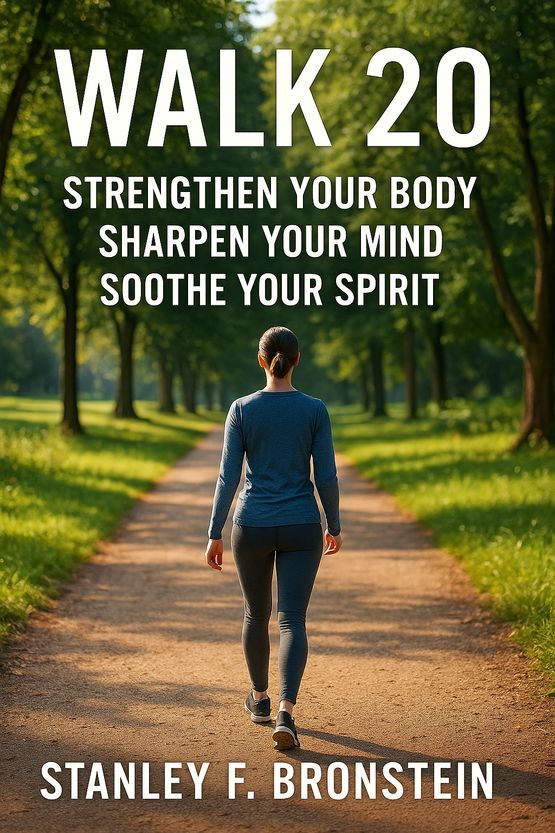
Walk 20
Strengthen Your Body – Sharpen Your Mind – Soothe Your Spirit
By Stanley F. Bronstein – MPWLC Founder
Click The Tabs Below To Read Each Chapter Of The Book Online
Or
📘 Download Your Free Copy
Walk 20 - Strengthen Your Body – Sharpen Your Mind – Soothe Your Spirit by Stanley Bronstein
Foreword
Foreword
Walk 20
Strengthen Your Body – Sharpen Your Mind – Soothe Your Spirit
When I first began walking seriously, I didn’t imagine it would become such a central part of my life. Like many people, I thought of walking as something simple—just a way to get from one place to another. But over time, it became so much more. It became my daily practice, my reset button, and my companion through both good days and difficult ones.
I’ve now walked thousands of miles—year after year, step after step. Along the way, I’ve discovered truths that are as steady as the rhythm of walking itself:
- That you don’t need to punish yourself with extreme exercise to be healthy.
- That, although I personally do more, twenty minutes of consistent daily walking is enough to change your body, clear your mind, and soothe your spirit.
- That movement is not a chore—it’s joy, freedom, and life itself.
Walking has taken me through every season, every kind of weather, and every mood. It has shown me that the best exercise isn’t about speed or competition—it’s about showing up, moving at your own pace, and leaving enough gas in the tank to come back tomorrow.
This book is my invitation to you: to make walking a friendly, reliable part of your life. Whether you’re lacing up your shoes for the very first time or simply looking to bring more consistency and purpose to your steps, Walk 20 will guide you. Together, we’ll explore the science behind walking, the practical tools that make it easier, and the deeper ways walking connects us to ourselves and to the world around us.
If you commit to twenty minutes a day, something remarkable happens. The minutes add up. The steps add up. The days add up. And soon, you realize you’re not just walking for exercise—you’re walking into a stronger body, a calmer mind, and a more peaceful spirit.
So let’s begin. Take your first step today. I’ll be right there with you, every step of the way.
— Stanley F. Bronstein
Table Of Contents
Table of Contents
Foreword
Introduction
Part I — Why Walk?
Chapter 1 — The Case for Walking
Chapter 2 — The Science of Walking
Chapter 3 — Movement, Not Just Exercise
Part II — Building the Habit
Chapter 4 — Getting Started
Chapter 5 — Slow and Steady Wins the Game
Chapter 6 — Fueling Your Walks: Nutrition Basics
Chapter 7 — Hydration and Energy
Part III — Walking for Health
Chapter 8 — Walking and Physical Health
Chapter 9 — Walking and Mental Health
Chapter 10 — Walking and Nutrition (Expanded Look)
Chapter 11 — Building Up Safely
Chapter 12 — Walking for All Ages
Chapter 13 — Safety First
Chapter 14 — Walking and Mindset
Part IV — The Deeper Benefits of Walking
Chapter 15 — Walking and Stress Relief
Chapter 16 — Walking and Sleep
Chapter 17 — Walking and Creativity
Chapter 18 — Walking and Spirituality
Part V — Practical Tips and Tools
Chapter 19 — Gear and Footwear
Chapter 20 — Where to Walk
Chapter 21 — “Weather” or Not to Walk Outside
Chapter 22 — Hydration and Walking
Chapter 23 — Staying Consistent and Overcoming Barriers
Part VI — Conclusion and Final Thoughts
Chapter 24 — A Lifelong Journey
Chapter 25 — The First Step
Introduction
Introduction — The Power of 20
If the word exercise makes you tense up, take a breath. This book isn’t about punishing workouts or chasing someone else’s definition of fitness. It’s about something much simpler, more natural, and more sustainable: walking.
Walking is movement. It’s what our bodies were designed to do. And movement isn’t something to dread—it’s something to embrace. It can be fun. It can be joyous. It can be the moment in your day where you reconnect with yourself.
And here’s the best part: you don’t need hours to see the benefits. You don’t need fancy equipment. You don’t need to go fast. You simply need 20 minutes a day.
Why Twenty Minutes?
Twenty minutes is the sweet spot. It’s long enough to matter, yet short enough to fit into the busiest schedule. Walk twenty minutes a day, seven days a week, and you’ll log 140 minutes—just shy of the 150 minutes per week recommended by the American College of Sports Medicine. That’s practically hitting the professional standard, with nothing more than your feet, your breath, and your willingness to show up.
This is why I call 20 minutes the baseline. It’s not the ceiling. Some days, you’ll do exactly twenty and be proud of it. Other days, you’ll feel like going longer—thirty, forty-five, maybe even sixty minutes. You may add a second walk later in the day. But you don’t have to. Twenty is always enough.
Slow and Steady Wins the Game
There’s no prize for speed here. You don’t have to be a “speed demon” to reap the benefits of walking. In fact, slow and steady wins the game—especially the game of life.
Here’s a simple rule: walk at a pace that leaves enough gas in your tank to come back tomorrow… and the day after… and the day after that. Consistency, not intensity, is what creates lasting transformation.
More Than Exercise
Walking is more than calorie burn or step counts. It’s the feel of sunlight on your face, fresh air in your lungs, the steady rhythm of your stride. It’s a chance to clear your mind, or to let it wander and untangle itself. It can be social time with a friend, quiet time for reflection, or even a moving meditation.
Walking isn’t a chore—it’s freedom. It’s presence. It’s the most accessible, enjoyable way to strengthen your body, sharpen your mind, and soothe your spirit.
Weather, Hydration, and Other Real-Life Things
Life isn’t perfect, and neither is the weather. Some days are too hot, too cold, too rainy, or too icy. That’s okay. On those days, head indoors: a treadmill, a gym track, a shopping mall, even a long hallway at home. The location doesn’t matter. What matters is showing up.
Hydration matters too. On hot days outdoors, bring enough water—about a liter for every hour you plan to walk. Indoors, just sip steadily, about every ten minutes or so. Small steps like this make walking safer, more comfortable, and more enjoyable.
Start Simple
You don’t need much to begin—just comfortable shoes, breathable clothes, and water. If you want to refine later, you can. But for now, don’t let gear become an excuse. Start with what you have, start where you are, and let the practice take root.
What to Expect
If you give yourself twenty minutes a day, you’ll notice changes. Some will be small and subtle at first, others will build over time. But all of them matter:
-
Body: More energy, better circulation, stronger muscles, steadier weight.
-
Mind: Calmer moods, clearer thoughts, lower stress.
-
Spirit: A renewed sense of presence and peace.
Walking is movement, yes—but more than that, it’s a rhythm, a daily practice, a gentle anchor. It’s a habit that can transform your life in ways both obvious and surprising.
Take the First Step
This book will guide you through the science, the strategies, and the stories of walking. But none of that matters without your first step.
So start today. Lace up your shoes. Walk at your own pace. Leave a little energy in the tank so you’ll want to come back tomorrow. Let twenty minutes become your daily rhythm, and soon you’ll see: step by step, day by day, your body, mind, and spirit will begin to change.
Part I — Why Walking Works
Part I — Why Walking Works
Every habit worth keeping has to feel like it’s doing something for you. If you’re going to carve out twenty minutes a day, you want to know it matters. And walking does. In fact, it may be the most underrated tool we have for building a healthier, calmer, longer, and more joyful life.
Science has been catching up with what human beings have known for centuries: walking heals, strengthens, and restores. Every step you take sets off a chain of positive effects inside your body. Your heart beats stronger. Your lungs work more efficiently. Your blood flows more freely. Your brain lights up in ways that sharpen your focus and lift your mood. All of this happens without punishing workouts, without extreme effort, without wearing down your joints.
And walking doesn’t just add years to your life—it adds life to your years. It helps you feel better now, while also stacking the odds in your favor for the future. With every step, you’re investing in stronger bones, steadier weight, a calmer nervous system, and a mind that can think more clearly.
In the chapters ahead, we’ll look at the research and the real-world results that show just how powerful walking can be. We’ll explore how it strengthens your body, protects your heart, and supports your brain. We’ll see how it helps you live longer, handle stress better, and find a deeper sense of peace through something as simple as moving your feet.
Walking works. And once you understand just how much it does for you, those twenty minutes a day won’t feel like a chore. They’ll feel like a gift you give yourself—every single day.
Chapter 1 — The Science of Walking
Chapter 1 — The Science of Walking
Walking may look simple, but inside your body it’s anything but. With each step, dozens of systems come alive, working together in harmony. Your muscles contract and release, your joints flex smoothly, your heart pumps harder, your lungs expand deeper, and your brain releases a cocktail of chemicals that make you feel calmer and clearer.
The beauty of walking is that it delivers these benefits without asking much from you. No special equipment, no steep learning curve, no overwhelming time commitment. Just your body, moving the way it was designed to move.
Your Heart Loves Walking
The moment you begin walking, your heart rate climbs gently. Unlike sudden, high-intensity workouts that can spike blood pressure and stress your system, walking provides a steady cardiovascular boost that strengthens your heart muscle over time. Studies consistently show that regular walkers have a lower risk of heart disease, stroke, and high blood pressure.
A brisk twenty-minute walk improves circulation, helps regulate cholesterol, and even supports healthier blood sugar levels. These aren’t just numbers on a chart—they’re the markers of a stronger, more resilient body that’s prepared for the challenges of daily life.
Muscles, Joints, and Bones
Walking engages more than just your legs. Your hips, core, back, and even your arms contribute to every stride. Over time, this gentle but constant engagement tones muscles, improves posture, and increases flexibility.
Because walking is weight-bearing, it helps keep your bones strong. It encourages bone density, which lowers the risk of osteoporosis as we age. And unlike running or jumping, walking does all of this while being one of the least stressful exercises on your joints. In fact, walking is second only to swimming in terms of being kind to your body while still providing cardiovascular benefits.
The Brain Boost
Here’s where walking really shines. Just twenty minutes of walking increases blood flow to the brain, delivering more oxygen and nutrients that support mental clarity. Many walkers notice that their best ideas come mid-stride. That’s no accident—walking actually sparks creative thinking and problem-solving.
Even more, walking helps regulate brain chemicals like serotonin and dopamine, which improve mood and fight off anxiety and depression. Scientists have found that regular walking can even help preserve memory and slow cognitive decline as we age.
In short: every walk is like hitting the “refresh” button for your brain.
Chemical Harmony
Inside your bloodstream, walking sets off a chain reaction. Stress hormones like cortisol begin to drop. Feel-good chemicals like endorphins rise. Your blood sugar steadies, and your body becomes more sensitive to insulin. Over time, this lowers your risk of type 2 diabetes and improves your body’s ability to handle everyday stress.
This chemical balance is why so many people finish a walk feeling not just physically better, but emotionally lighter. It’s as if your body has its own built-in pharmacy—and walking is the way to unlock it.
The Big Picture
Think of walking as a gentle switch that flips on your body’s most powerful systems:
-
Heart: stronger circulation and cardiovascular health
-
Muscles & Bones: improved strength, posture, and resilience
-
Joints: low-impact movement that preserves mobility
-
Brain: sharper thinking, better mood, more creativity
-
Chemistry: balanced hormones, lower stress, steadier energy
All of this from something as natural as putting one foot in front of the other.
Walking isn’t just exercise. It’s the science of health, wrapped in simplicity. And the best part? The more consistently you walk—even for just twenty minutes a day—the more these benefits compound. It’s not about one walk. It’s about building a rhythm that your body and mind can count on, day after day.
Chapter 2 — Walking and Longevity
Chapter 2 — Walking and Longevity
When most people think about adding years to their life, they imagine complicated medical treatments, strict diets, or punishing workouts. But the truth is far simpler: something as natural as walking can help you live not only longer, but better.
Adding Years to Your Life
Study after study confirms it: regular walking is linked with a longer lifespan. People who walk at least 20 minutes a day consistently show lower risks of heart disease, stroke, diabetes, and even certain cancers. Each of these conditions can shorten life expectancy—but walking pushes the odds in your favor.
And it doesn’t take marathon distances. Just those daily 20 minutes are enough to create meaningful reductions in risk. When you add it up over weeks, months, and years, the math is clear: steady movement builds a longer life.
Adding Life to Your Years
Longevity isn’t just about living longer—it’s about living better. What good is a long life if it’s marked by frailty, pain, or dependence on others?
Walking helps protect against that. It keeps your muscles stronger, your balance steadier, and your joints more mobile. It helps preserve independence well into older age. Many seniors who walk regularly are able to live more active, fulfilling lives—not because they’ve escaped aging, but because they’ve given their bodies the gift of resilience.
The Blue Zones Connection
Around the world, there are regions known as Blue Zones—places where people live significantly longer than average. Researchers studying these areas found common threads: strong communities, healthy diets, lower stress, and, almost always, regular walking woven into daily life.
People in these regions aren’t logging steps with fitness trackers. They’re walking to the market, tending gardens, visiting friends, and moving naturally throughout the day. It’s proof that walking isn’t just a form of exercise—it’s a lifestyle that supports longevity on every level: body, mind, and spirit.
Small Steps, Big Impact
The power of walking for longevity isn’t about extraordinary effort. It’s about consistency. A walk every day may not feel like much in the moment—but years later, it becomes one of the most powerful choices you’ve ever made.
Every step is a deposit in your health bank account. You may not notice the interest building day by day, but over time, the dividends show up as extra years and a better quality of life during those years.
The Takeaway
Walking adds years to your life by lowering your risk of chronic disease. It adds life to your years by keeping you strong, steady, and independent. And it does all of this without strain, without stress, without the barriers that come with more demanding forms of exercise.
So when you lace up for your daily 20 minutes, remember: you’re not just walking for today. You’re walking for the future version of yourself—the one who will thank you for every single step.
Chapter 3 — Walking for Mental Health
Chapter 3 — Walking for Mental Health
We often think of exercise as something we do for the body. But ask anyone who has ever gone for a walk after a stressful day, and they’ll tell you: the mind benefits just as much—sometimes even more. Walking isn’t just movement for your muscles; it’s medicine for your mood.
Walking Away Stress
Stress is unavoidable. Work, family, finances, daily responsibilities—they pile up. Left unchecked, stress can feel like a heavy weight on your shoulders. But here’s the good news: walking lightens the load.
When you walk, your body reduces levels of cortisol, the main stress hormone. At the same time, your brain releases endorphins—natural feel-good chemicals that act like a reset button. After twenty minutes, most people notice they feel calmer, lighter, and more in control.
Lifting the Fog of Depression and Anxiety
Walking is also a powerful tool against depression and anxiety. Research shows that even modest amounts of walking reduce symptoms of both. It doesn’t replace professional care when that’s needed, but it does offer a safe, accessible way to support mental health daily.
Think of it this way: every walk is a small act of self-care, one that strengthens the mind just as much as the body. Over time, these small acts add up to resilience—the ability to weather life’s storms without breaking down.
The Creativity Connection
Have you ever noticed that your best ideas often come during a walk? That’s not coincidence—it’s science. Walking increases blood flow to the brain and frees up mental bandwidth, making it easier to connect dots and think creatively.
Writers, inventors, and philosophers throughout history have used walking as a thinking tool. From Aristotle to Steve Jobs, some of the world’s greatest ideas were sparked mid-stride. Your twenty-minute walk might not change the world—but it might just unlock the solution you’ve been looking for.
Nature, Movement, and Mood
Walking outside adds an extra layer of benefit. Fresh air, natural light, and the sights and sounds of nature all combine to calm the nervous system. Even short exposure to green spaces has been shown to lower blood pressure, reduce anxiety, and boost overall well-being.
Of course, when the weather doesn’t cooperate, indoor walking works too. The important thing is moving consistently. But when you can, take it outdoors—your mind will thank you.
The Takeaway
Walking is one of the simplest, most effective tools we have for mental health. It reduces stress, fights depression and anxiety, sparks creativity, and helps us feel grounded in a busy world.
So the next time you feel overwhelmed, restless, or stuck, don’t overthink it. Step outside, put one foot in front of the other, and let the rhythm of walking steady your mind. Twenty minutes later, you’ll see the world a little differently.
Chapter 4 — Walking as Moving Meditation
Chapter 4 — Walking as Moving Meditation
When most people hear the word meditation, they picture sitting quietly with their eyes closed, trying to clear their mind. For some, that works beautifully. For others, it feels impossible. But what if meditation didn’t require stillness at all? What if it could happen while you were moving?
That’s exactly what walking offers: a way to meditate in motion.
The Rhythm of Breath and Step
Walking has a built-in rhythm—left, right, left, right—that mirrors the steady flow of breathing. When you bring awareness to both, walking becomes more than movement. It becomes presence.
Try this simple practice: match your steps to your breath. Inhale for two steps, exhale for two steps. Or, if you prefer, simply notice how your breathing naturally syncs with your walking. Within minutes, your mind begins to quiet. The noise of the day fades, replaced by the gentle cadence of breath and footfall.
Engaging the Senses
Walking meditation invites you to notice what’s around you—and within you. Look at the way sunlight filters through the trees. Listen to birds, wind, or the hum of the city. Feel the ground beneath your feet. Smell the air—fresh after rain, earthy on a trail, crisp in winter.
Instead of rushing past life’s details, you’re tuning into them. This kind of sensory awareness grounds you in the present moment and creates a calm, expansive feeling inside.
Untangling the Mind
So often, our thoughts run wild—rehashing the past, worrying about the future. Walking meditation gives the mind room to untangle itself. The gentle movement helps thoughts pass more easily, like clouds drifting across the sky.
Some days you may find clarity. Other days, you may simply enjoy a reprieve from overthinking. Both are valuable. Both are healing.
Finding Flow
Athletes call it “being in the zone.” Artists call it “flow.” It’s the state where time seems to disappear and you’re fully absorbed in the moment. Walking can take you there too. The repetitive rhythm, combined with relaxed awareness, naturally leads to flow. And in flow, stress loosens its grip, and creativity and peace step forward.
Practical Ways to Try Walking Meditation
-
Silent Walks: Leave the headphones at home. Let nature—or the city—be your soundtrack.
-
Prayer Walks: If you’re spiritually inclined, use your walk as a time for prayer or reflection.
-
Gratitude Walks: With each step, think of something you’re grateful for.
-
Stress Walks: When the weight of life feels heavy, take it with you on a walk. Notice how lighter it feels by the time you return.
The Takeaway
Meditation doesn’t always require stillness. Walking can be meditation in motion—a practice that calms the mind, steadies the body, and opens the spirit.
Your twenty-minute walk can be more than exercise. It can be a daily opportunity to breathe deeply, notice fully, and reconnect with what matters most.
Chapter 5 — Walking for Weight Management
Chapter 5 — Walking for Weight Management
When people talk about losing weight, they often imagine high-intensity workouts, strict diets, or complicated routines. Walking doesn’t always come to mind. Yet it should. Walking is one of the most effective, sustainable ways to manage weight—not because it burns the most calories in the shortest time, but because it’s an activity you can actually keep doing, day after day, year after year.
Burning Calories the Simple Way
Yes, walking burns calories. A 20-minute walk can burn around 80–120 calories, depending on your pace and body size. That might not sound dramatic compared to a grueling gym session—but here’s the secret: consistency beats intensity.
If you walk 20 minutes every day, that adds up to more than 700 calories per week. Stretch it to 30 minutes and you’re closer to 1,000. Over the course of months, these steady, moderate burns make a significant difference.
Walking and Metabolism
Walking also helps regulate metabolism. It improves insulin sensitivity, making it easier for your body to manage blood sugar. This not only lowers the risk of diabetes but also reduces energy crashes and cravings. When your blood sugar is stable, you’re less likely to overeat or reach for unhealthy snacks.
Preventing Weight Regain
One of the hardest parts of weight management isn’t losing weight—it’s keeping it off. Research shows that walking is one of the most effective strategies for maintaining weight loss long-term. Unlike extreme exercise programs, walking doesn’t burn people out or lead to injury. It’s sustainable, which is why it works for the long haul.
Walking and Appetite
Interestingly, walking may even help regulate appetite. Gentle movement can reduce the urge to snack from stress or boredom. Many people find that a short walk after meals aids digestion and lessens cravings. It’s not just about burning calories—it’s about helping your body and mind work together to maintain balance.
Walking + Nutrition = Success
Walking alone can do a lot, but pairing it with good nutrition multiplies the effect. Whole foods, lean proteins, fresh fruits and vegetables, and plenty of water create the foundation for healthy weight management. Walking then becomes the engine that helps your body use that fuel effectively.
The Takeaway
Walking isn’t a crash course in weight loss—it’s a steady path to balance. It burns calories, regulates metabolism, helps control appetite, and keeps the weight off once it’s gone. Most importantly, it’s enjoyable and sustainable, which means you’ll actually stick with it.
So forget about chasing shortcuts or punishing routines. Put one foot in front of the other, day after day, and let walking help carry you to a healthier, steadier weight—and a body you feel good living in.
Part II — Walking for Everyone
Part II — Walking for Everyone
One of the most beautiful things about walking is its inclusivity. It isn’t reserved for athletes, the young, or the super-fit. Walking truly is for everyone. Whether you’re a child bounding with energy, an adult juggling work and family, or a senior seeking steadiness and independence, walking meets you right where you are.
Walking adapts to life’s seasons. In youth, it builds habits of movement and exploration. In adulthood, it offers balance in the middle of busy lives. In later years, it preserves mobility, independence, and connection to the world. Even for those facing health challenges, walking can often be modified to fit—slower paces, shorter distances, or supportive aids can make it accessible.
The beauty of walking isn’t in how far or how fast you go, but in the fact that you can do it at all. And when you commit to doing it consistently—even just twenty minutes a day—you’ll discover it becomes not just a physical practice, but a life practice.
In this section, we’ll explore how walking works for every stage of life, how to find the right environments to walk in, the gear and footwear that can help, and how walking can connect us with others and with the food that fuels us. This is walking in the real world: practical, adaptable, and available to everyone.
Chapter 6 — Walking at Any Age
Chapter 6 — Walking at Any Age
Walking is one of the rare activities that meets us at every stage of life. From the first wobbly toddler steps to the steady stride of adulthood, and even into the gentler pace of later years, walking is always there. It grows with us, adapts with us, and supports us in ways few other forms of movement can.
Walking in Childhood
Children are natural movers. For them, walking is discovery. Every step is a chance to explore the world, build coordination, and strengthen growing muscles and bones. Encouraging walking early—whether it’s a walk to school, a family stroll after dinner, or exploring a park—instills the habit of movement from the beginning.
Walking also provides time for connection. Parents who walk with their kids create space for conversation, curiosity, and shared memories. A short daily walk can become as much about bonding as it is about health.
Walking in Adulthood
For adults, life is often busy and stressful. Work demands, family responsibilities, and packed schedules leave little room for long workouts. That’s why walking is so powerful: it’s flexible, it’s free, and it fits into the cracks of daily life.
A twenty-minute walk at lunch, a stroll after dinner, or even pacing during phone calls can make a noticeable difference in energy and mood. Adults who walk regularly tend to sleep better, manage stress more effectively, and maintain steadier weight over time.
Walking also balances the physical toll of sedentary jobs. Hours at a desk or in front of a screen tighten muscles and strain posture. Walking unwinds the body and refreshes the mind.
Walking in Later Years
As we age, movement becomes even more important. Walking helps maintain independence, supports balance, and reduces the risk of falls. It strengthens bones, preserves mobility, and keeps joints lubricated through gentle use.
Many older adults find walking to be both accessible and enjoyable, especially when high-impact exercise is no longer an option. Even short, slow walks provide benefits. The key is consistency. Every step is a step toward longevity, resilience, and quality of life.
And just as importantly, walking provides connection. Group walks, community walking clubs, or even a daily lap around the neighborhood can help reduce loneliness and keep the spirit strong.
Adapting for Health Challenges
Walking can be adapted for nearly every condition. For those with mobility challenges, shorter walks, supportive shoes, walking poles, or even indoor tracks provide safe options. For individuals recovering from illness or injury, walking often becomes the bridge back to fuller activity.
The goal isn’t speed or distance—it’s steady, sustainable movement. Even a few minutes can be the foundation for progress.
The Takeaway
Walking is for every age, every season, and every circumstance. It’s not about competing with others, but about showing up for yourself. Whether you’re nine or ninety, the act of putting one foot in front of the other brings strength, clarity, and joy.
Wherever you are in life, walking meets you there—and invites you to keep moving forward.
Chapter 7 — Walking in the Real World
Chapter 7 — Walking in the Real World
Walking is simple, but life isn’t always. Busy streets, harsh weather, safety concerns, and everyday responsibilities can all get in the way. The good news is that walking is one of the most flexible activities there is—you can do it almost anywhere, in almost any condition, with just a little creativity.
Outdoors: The Natural Choice
There’s nothing quite like walking outside. Fresh air fills your lungs. Sunlight hits your skin, giving you a healthy dose of vitamin D. The sights and sounds of nature—or even the steady rhythm of a city street—create variety and interest.
Walking outdoors also connects you with the world around you. A favorite trail, a tree-lined sidewalk, a quiet beach, or even your own neighborhood block can become your daily reset button.
Indoors: When Weather Gets in the Way
But let’s be honest: sometimes the weather doesn’t cooperate. Extreme heat, bitter cold, heavy rain, or icy sidewalks can make walking outside unsafe or miserable. That’s where indoor options shine.
-
Treadmills are a straightforward substitute for outdoor walking.
-
Gyms or recreation centers often have indoor tracks.
-
Shopping malls provide long stretches of climate-controlled space.
-
Even a large hallway at home or work can become a walking path.
The location matters less than the habit. Indoors or outdoors, what counts is that you’re walking.
Urban, Suburban, and Rural Walks
Walking looks different depending on where you live:
-
Urban walkers enjoy the energy of city streets, with endless options for routes. Sidewalks and parks provide ready-made paths, though traffic and crowds mean you’ll need to stay alert.
-
Suburban walkers often find peace in quiet neighborhoods or greenbelts, with a balance of nature and convenience.
-
Rural walkers may enjoy the solitude of open roads, trails, or farmland. These walks bring tranquility—but sometimes require attention to safety and visibility.
Wherever you are, walking can fit.
Sidebar: “Weather” or Not to Walk Outside
Should you walk outside when the weather looks rough? The answer depends.
-
Mild rain or cool temperatures: often refreshing—just dress for it.
-
Heat waves, lightning, icy conditions: better to stay indoors. Safety always comes first.
-
Cold climates: indoor walking can be a lifesaver during winter months. Malls, gyms, or treadmills can keep you moving until the thaw.
Remember: the goal is consistency, not toughness. You don’t get extra points for suffering through unsafe conditions.
Finding Your Walking Place
Everyone needs a go-to walking spot. Somewhere safe, reliable, and easy to access. But variety helps too—different routes and environments keep walking fresh and interesting. Try mixing in a park one day, a city loop the next, and an indoor option when the weather turns.
The Takeaway
Walking in the real world is about flexibility. Some days it’s a sunlit stroll through nature. Other days it’s a treadmill session at the gym. Sometimes it’s with friends, sometimes it’s solo.
What matters isn’t where you walk. What matters is that you do.
Chapter 8 — What You Need for Walking
Chapter 8 — What You Need for Walking
One of the best things about walking is that it doesn’t require much. You don’t need a gym membership, expensive gear, or complicated equipment. All you really need is yourself, a place to walk, and a little preparation to make the experience comfortable and safe.
That said, a few thoughtful choices can make your walks more enjoyable and sustainable over the long term.
Shoes: Your Most Important Tool
Your shoes are the one piece of “gear” that matter most. Good walking shoes provide support, cushioning, and durability. Look for shoes that fit well—not too tight, not too loose—and allow your toes to move naturally.
For most people, a sturdy pair of athletic shoes with a flexible sole is enough. If you’re starting fresh, consider going to a specialty store where you can be fitted properly. Shoes don’t need to be fancy, but they should be comfortable and encourage you to want to walk.
Minimalist Footwear: A Special Note
Some walkers (myself included) prefer minimalist footwear—shoes designed to mimic barefoot walking while still offering basic protection. These shoes are lightweight, flexible, and allow your feet to move more naturally.
But they take some getting used to. If you’ve always worn heavily cushioned shoes, switching to minimalist footwear requires patience. Transition slowly. Start with short walks, allow your muscles and tendons to adapt, and increase gradually. Done carefully, minimalist walking can strengthen your feet and improve your stride—but rushing the transition can lead to discomfort or injury.
Clothing
Clothing doesn’t need to be technical or expensive. The key is comfort. Choose breathable fabrics that wick away moisture and move easily with your body. In colder weather, dress in layers so you can adjust as your body warms up.
For visibility, especially if you’re walking early in the morning or late in the evening, consider light-colored clothing or reflective gear. Being seen is just as important as being comfortable.
Hydration
Hydration is often overlooked, but it’s essential. Even in cooler temperatures, walking depletes your body’s water reserves.
-
Rule of thumb for hot weather: bring about one liter of water for every hour you plan to walk.
-
Indoors or in mild conditions: simply take a sip every ten minutes or so to stay refreshed.
Carrying a reusable bottle or using a small hydration pack makes this easy.
Extras (Optional, But Helpful)
-
Hat or sunglasses for sun protection.
-
Walking poles for those who want extra support or upper-body engagement.
-
Step counters or apps to track progress and stay motivated.
-
Light backpack or waist pack if you want to carry water, a snack, or personal items.
Remember, these are nice-to-haves, not must-haves. Don’t let lack of gear stop you from getting started.
The Takeaway
Walking is refreshingly simple. With a comfortable pair of shoes, weather-appropriate clothing, and water to keep you hydrated, you have everything you need. Start with the basics, keep it simple, and let the act of walking—not the equipment—be the focus.
Over time, you may refine your gear and find what works best for you. But the most important step is the first one—taken in whatever shoes and clothes you already have.
Chapter 9 — Walking and Community
Chapter 9 — Walking and Community
Walking may begin as a personal habit, but it often grows into something more: a way to connect with others. A simple walk can strengthen relationships, build accountability, and create a sense of belonging. In a world where many people feel isolated or pressed for time, walking offers a chance to move, talk, and share life—step by step.
Walking with Friends and Family
One of the easiest ways to make walking more enjoyable is to bring someone along. A twenty-minute walk with a spouse, child, or friend turns exercise into quality time. Without screens or distractions, conversations flow more easily. You might find that walking together becomes your favorite time of the day.
Parents, especially, can use walking as a way to connect with their children. Whether it’s walking to school, circling the neighborhood after dinner, or exploring a park on the weekend, these small moments build both health and memories.
Walking Groups
For those who crave accountability or community, walking groups are a wonderful option. Some neighborhoods, churches, and community centers organize group walks. Others form informally among friends or coworkers.
Walking groups provide motivation—you’re less likely to skip when others are counting on you. They also create connection, especially for people who may feel isolated. The simple act of walking side by side often sparks friendships that might not have formed otherwise.
Workplace Walking
Walking can even bring community into the workplace. “Walking meetings” are becoming more popular, offering a refreshing alternative to sitting around a table. They encourage creativity, reduce stress, and often make discussions more productive.
Even short breaks—a loop around the building or a walk across campus—can foster camaraderie among coworkers.
Community Health
Walking also has a ripple effect. When more people walk, communities become healthier. Parks and sidewalks get more use. Local walking trails become gathering spots. Families spend more time outdoors. The simple act of walking together can knit a community closer.
Walking Alone: A Community with Yourself
Of course, not every walk has to be social. Walking alone can be just as important. It offers time for reflection, prayer, meditation, or simply enjoying solitude. These walks are a chance to reconnect with yourself—the most foundational relationship of all.
I always say that when you walk, you will meet some very interesting people and the most interesting person you will meet, is yourself …
The Takeaway
Walking builds connection—whether it’s bonding with family, creating friendships, collaborating at work, or simply being more present with yourself. It turns a solitary act into a shared experience, reminding us that movement is not only healthy, but also deeply human.
When you walk, you’re never just moving your body. You’re moving toward stronger relationships, a stronger community, and a stronger sense of belonging.
Chapter 10 — Walking and Nutrition
Chapter 10 — Walking and Nutrition
Walking is powerful on its own, but paired with proper nutrition, it becomes even more effective. Think of food as the fuel for your journey. The better the fuel, the smoother the ride. You don’t need a complicated diet plan to support walking—just a few mindful choices that make movement more enjoyable and sustainable.
Movement, Not “Exercise”
Before we dive in, let’s clear up one important point: walking is movement. Too often, people hear the word “exercise” and imagine something grueling, punishing, or unpleasant. Walking is the opposite. It’s joyful, natural movement—something the human body was designed to do. And when you fuel your body well, that movement feels lighter, easier, and more energizing.
Whole Foods, Whole Energy
The foundation of good nutrition for walking is simple: eat real food. Fresh fruits and vegetables, lean proteins, whole grains, nuts, seeds, and healthy fats all provide the vitamins, minerals, and energy your body needs.
These foods not only fuel your walks, but they also aid recovery—helping your muscles repair, your joints stay strong, and your energy levels remain steady throughout the day.
Hydration Matters
We’ve already talked about hydration for walking, but it’s worth repeating: water is vital. Even mild dehydration can sap energy and make walking feel harder.
-
Outdoors in heat: bring about one liter of water for every hour you plan to walk.
-
Indoors or mild weather: sip steadily—about every 10 minutes.
Staying hydrated also helps regulate body temperature and supports digestion, circulation, and joint health.
Timing Your Meals and Walks
You don’t need to overthink meal timing, but a few simple strategies help:
-
Before a walk: a light snack with carbs and a little protein (like fruit with yogurt, or a slice of whole-grain toast with nut butter) can provide steady energy.
-
After a walk: aim for a balanced meal with protein and complex carbs to help replenish energy stores and repair muscles.
And here’s an important note: not all carbs are created equal. Over the years, “carbs” have gotten a bad reputation. But it’s not the whole story—it’s really just the bad carbs (like refined sugars, white bread, pastries, and processed snacks) that spike blood sugar, cause crashes, and lead to cravings. These are referred to as simple carbs.
Complex carbohydrates, on the other hand, are carbs made up of longer chains of sugar molecules. The reason they take longer to break down is because they’re packed with fiber—and fiber slows digestion. This steady breakdown means your body gets a more gradual release of energy, instead of the quick spike and crash you get from refined carbs.
Examples of complex carbs include whole grains (brown rice, oats, quinoa), beans, lentils, vegetables, and fruits. These fiber-rich foods don’t just give you lasting energy—they also help keep you fuller for longer and support healthy digestion.
So don’t fear carbs. Just make the distinction: avoid the stripped-down, fiberless carbs, and embrace the ones that fuel your body and your walks in the best way possible.
Walking and Weight Management
Pairing walking with balanced nutrition makes managing weight much easier. Walking burns steady calories, while nutritious foods keep you satisfied and reduce cravings. Together, they create a sustainable cycle: walk to move your body, eat to nourish it, repeat.
Mindful Eating, Mindful Walking
Walking also supports a more mindful relationship with food. A short walk after meals aids digestion and prevents sluggishness. Some people find that walking helps reduce emotional or stress-driven eating.
Think of it as a loop: good food makes walking easier, and walking makes mindful eating easier. Both support one another.
The Takeaway
Walking doesn’t require a special diet—but it pairs beautifully with good nutrition. Eat whole foods, stay hydrated, and choose complex carbs over refined ones. Together, walking and nutrition create a foundation of energy, strength, and balance that will carry you forward for years to come.
Walking is movement. Movement is life. And when you fuel that life well, every step feels lighter and more joyful.
Part III — Making Walking a Daily Habit
Part III — Making Walking a Daily Habit
So far, we’ve explored the science of walking, the mental and physical benefits, and how walking can fit into every stage of life. But knowledge alone isn’t enough. The real magic happens when walking shifts from something you do occasionally to something that becomes a natural, daily part of your life.
That’s what this section is about: habit.
A single twenty-minute walk feels good. A week of walking feels even better. But when you weave walking into the fabric of your life—when it becomes as natural as brushing your teeth or pouring your morning coffee—that’s when you unlock its full power.
The truth is, walking is not about intensity, competition, or perfection. It’s about consistency. The twenty minutes you commit to every day build on one another, creating a rhythm your body, mind, and spirit can rely on.
In the chapters ahead, we’ll look at how to build and strengthen the habit of walking—how to start small, increase gradually, and find joy in the process. We’ll talk about pacing, setting goals, safety, and the mindset that turns walking into something you look forward to each day.
Because walking isn’t just an activity. It’s a lifestyle. And the sooner it becomes a habit, the more it becomes a steady anchor in your life—one that supports you through good days, hard days, and everything in between.
Chapter 11 — Building the Habit
Chapter 11 — Building the Habit
Every meaningful change in life begins with a habit. Not a grand gesture or a one-time event, but the small, steady actions repeated over time. Walking is no different. The secret isn’t walking the farthest, the fastest, or the most—it’s walking consistently.
Start Small, Start Today
When people first commit to walking, they sometimes overdo it. They set ambitious goals—five miles a day, seven days a week—and then burn out within a week. The key to success is to start small and sustainable.
If you’re new to walking, begin with just 10–15 minutes a day. Once it feels natural, extend to 20 minutes. From there, you can build up further if you’d like—but 20 minutes daily is enough to reap nearly all the benefits.
The important part isn’t distance or pace—it’s building the routine.
The Power of Routine
Habits stick best when they’re tied to something you already do. Think of walking as something you “attach” to part of your daily life.
-
A short walk right after breakfast.
-
A midday stroll during lunch.
-
An evening walk after dinner.
When you pair walking with a regular part of your day, it becomes automatic, not optional.
Walk More If You Can
The title of this book is Walk 20—but let’s be clear: you’re encouraged to walk more if you’re able. Twenty minutes a day is a baseline. For many, once the habit takes root, walking naturally extends—30 minutes, 45 minutes, even an hour or more.
Every extra step you take adds to the benefits. But remember: you don’t have to be a speed demon unless you want to. Slow and steady is perfectly fine. In fact, slow and steady often wins the game—and this includes the game of life.
Leave Gas in the Tank
When you walk, pace yourself in a way that leaves “gas in the tank.” You don’t want to push so hard that you dread tomorrow’s walk. Instead, move at a pace that feels sustainable, one that makes it easy to lace up again the next day—and the next, and the next after that.
This mindset is what transforms walking into a daily, lifelong practice instead of a short-lived experiment.
Track Your Wins
Sometimes seeing your progress helps cement the habit. A step counter, walking app, or even a simple calendar where you mark each walk can keep you motivated. Progress doesn’t have to mean faster times or longer distances. It can be as simple as looking back and realizing, I’ve walked every day this week.
That sense of accomplishment builds momentum.
The Takeaway
Building the walking habit isn’t about grand goals or overnight change. It’s about starting small, being consistent, and creating a rhythm that feels good enough to repeat day after day.
Walk at a pace that feels right, leave yourself enough energy to come back tomorrow, and watch as those small, daily steps add up to something life-changing.
Chapter 12 — Setting the Right Pace
Chapter 12 — Setting the Right Pace
When it comes to walking, one of the most common questions people ask is: “How fast should I go?” The answer might surprise you. The right pace isn’t about competing with anyone else—it’s about finding the rhythm that works best for you.
You Don’t Have to Be a Speed Demon
Some people think that unless they’re walking fast, it “doesn’t count.” That’s not true. Walking at any pace benefits your body and mind. In fact, one of the biggest reasons walking is sustainable is because it’s gentle. You don’t have to strain or struggle to reap the rewards.
That said, if you enjoy speed walking or pushing yourself, go for it. Faster paces can give your heart and lungs a stronger workout. But slow and steady is perfectly fine. Remember: slow and steady often wins the game—including the game of life.
The Talk Test
One easy way to gauge your pace is the “talk test.” At a comfortable walking pace, you should be able to hold a conversation without gasping for breath. If you can sing, you might be going too slow; if you can’t talk in full sentences, you might be going too fast.
The talk test helps you find that sweet spot where walking feels challenging enough to get your blood pumping, but not so hard that it feels exhausting.
Leaving Gas in the Tank
Your pace should leave you with enough “gas in the tank” to walk again tomorrow—and the next day, and the day after that. If you push so hard that you feel drained or sore, the habit won’t last. The goal isn’t to exhaust yourself—it’s to create consistency.
Think of walking like a candle. You want a steady flame, not a quick flare that burns out.
Mixing It Up
Once you’ve built a solid habit, you might enjoy experimenting with pace. Some walkers like to add “intervals”—short bursts of faster walking followed by slower recovery periods. Others enjoy a brisk walk some days and a leisurely stroll on others. Variety can keep walking fresh, but it’s never required.
Listening to Your Body
The best pace is the one your body feels good with. Some days you’ll have more energy and naturally walk faster. Other days, your body may ask for something gentler. Both are valid. What matters is that you keep walking.
The Takeaway
There’s no single “right” pace for walking. What matters most is consistency, comfort, and joy. Walk at a pace that allows you to return tomorrow, and let your body set the rhythm.
Walking isn’t a race—it’s a lifelong journey. Find the pace that keeps you moving forward, and you’ll win every time.
Chapter 13 — Safety First
Chapter 13 — Safety First
Walking is one of the safest forms of movement you can do. But like anything in life, a little awareness goes a long way. With a few simple precautions, you can keep your walks safe, comfortable, and enjoyable—so the only thing you have to focus on is putting one foot in front of the other.
Be Visible
If you’re walking early in the morning, late in the evening, or in areas with traffic, visibility is key. Drivers can’t avoid what they can’t see.
-
Wear light-colored or reflective clothing.
-
Consider a small clip-on light or reflective band for added safety.
-
Stick to well-lit areas whenever possible.
Being seen is just as important as being comfortable.
If you walk when it’s dark, consider carrying a flashlight or using your phone’s light for extra visibility. Not only does this help you see where you’re going, but it also makes it easier for others to see you.
Be Aware of Your Surroundings
Walking is a time to relax, but stay mindful of what’s happening around you.
-
Keep the volume low if you use headphones—or leave one earbud out—so you can hear traffic, bikes, or other people.
-
Stay alert at intersections, even if you have the right of way.
-
Make eye contact with drivers before crossing streets.
Awareness doesn’t have to feel like paranoia. It’s simply paying attention so you can enjoy your walk without surprises.
Choose Safe Routes
Whenever possible, walk in areas designed for pedestrians—sidewalks, trails, parks, or community walking paths. If you need to walk on the road, walk facing traffic so you can see what’s coming.
Walk Smart in Different Conditions
Weather changes the game:
-
Heat: Walk early or late in the day, wear light clothing, and bring water (about 1 liter per hour in hot weather).
-
Cold: Dress in layers, wear gloves and a hat, and watch for ice. Indoor options like malls or treadmills are smart alternatives.
-
Rain: Waterproof gear and good shoes help, but if conditions are severe, consider moving your walk indoors.
Remember: there’s no prize for pushing through unsafe conditions. Adjust instead.
Listen to Your Body
Safety isn’t just about the environment—it’s about your own body too. If you feel lightheaded, unusually fatigued, or in pain, slow down or stop. Walking should leave you energized, not depleted.
And if you’re new to walking or managing health conditions, check in with your doctor before starting a new routine.
Personal Safety
Depending on where you live, personal safety may also be a consideration.
-
Walk with a friend or group when possible.
-
Let someone know your route if you’re walking alone.
-
Carry a phone for emergencies.
The goal isn’t fear—it’s peace of mind.
The Takeaway
Walking is simple, safe, and accessible. With just a few precautions—being visible, aware, prepared, and equipped with a flashlight at night—you can make every walk enjoyable and worry-free.
The safer you feel, the more confident and consistent you’ll be. And confidence is the foundation for a lifelong walking habit.
Chapter 14 — Walking and Mindset
Chapter 14 — Walking and Mindset
When it comes to walking, your mindset can make all the difference. It’s not just about moving your body—it’s about how you think about the act of walking itself. The way you approach it mentally can determine whether it becomes a burden or a joy, a short-lived experiment or a lifelong habit.
Movement Is a Gift
Walking should never feel like punishment. Too often, people think of exercise as something they “have to” do, not something they “get to” do. Walking flips that perspective. Every step is a gift—an opportunity to move, breathe, and connect with yourself and the world around you.
Joy Over Obligation
When you walk with a sense of obligation, it can feel like a chore. But when you walk with curiosity, gratitude, and joy, it becomes something you look forward to. Notice the sights, sounds, and rhythms of your environment. Let walking be a celebration of movement, not a duty to check off a list.
Progress, Not Perfection
It’s easy to fall into the trap of “more is better.” More distance, more speed, more days. But walking isn’t about perfection. It’s about progress. Even if you only manage ten minutes one day, you’ve still shown up for yourself.
Every step counts. What matters most is consistency over time, not perfection in the moment.
Walking as Meditation
Walking can also be a form of meditation. With each step, focus on your breath, your stride, or the sensations in your body. Let your thoughts come and go without judgment. A walking meditation can bring calm, clarity, and peace—turning an ordinary walk into something deeply restorative.
The Inner Conversation
Mindset also means paying attention to the story you tell yourself while you walk. Do you focus on what you “can’t” do, or do you celebrate what you are doing? Instead of thinking, I’m only walking twenty minutes, think, I’m honoring my body for twenty minutes today. That shift in inner dialogue changes everything.
The Takeaway
Walking isn’t just physical—it’s mental and emotional. The right mindset transforms it from a routine into a ritual, from a task into a joy.
When you approach walking with gratitude, joy, and self-compassion, it becomes far more than movement. It becomes a way of life—a practice that supports not just your body, but your mind and spirit as well.
Part IV — Walking for a Lifetime
Part IV — The Deeper Benefits of Walking
By now, it’s clear that walking strengthens the body and builds a lasting habit. But walking also does something even more profound—it nurtures the parts of us that aren’t visible.
Walking quiets the noise of the world. It steadies the breath. It creates space for reflection, creativity, and calm. Many of life’s stresses and worries feel lighter after a walk, not because they disappear, but because our perspective changes.
In this section, we’ll look at the deeper benefits of walking: how it relieves stress, improves sleep, sparks creativity, and soothes the spirit. These are the rewards that go beyond physical health—the ones that enrich our minds and hearts.
Walking is not just movement. It’s medicine. It’s meditation. It’s a doorway into a fuller, calmer, and more connected life.
So as we step into this part of the journey, let’s explore what walking can unlock—not only in the body, but in the soul.
Chapter 15 — Walking and Stress Relief
Chapter 15 — Walking and Stress Relief
Stress is a part of modern life. Deadlines, responsibilities, family demands, and constant distractions can leave us feeling tense, scattered, and drained. While we can’t always control what life throws our way, we can control how we respond to it. And walking is one of the simplest, most effective stress relievers available.
Walking as a Reset Button
Have you ever noticed how problems feel a little smaller after a walk? That’s no coincidence. Walking helps the body shift from a state of stress (the “fight or flight” response) into a calmer state of balance. Movement lowers levels of stress hormones like cortisol and boosts the release of endorphins—your body’s natural “feel good” chemicals.
Even ten or twenty minutes of walking can act as a reset button, easing tension and giving your mind a chance to clear.
Breathing and Stress
When we’re stressed, our breathing often becomes shallow and tight. Walking naturally deepens the breath, syncing it with the rhythm of our steps. This oxygenates the body, relaxes the nervous system, and helps restore calm.
If you want to be intentional, try coordinating your breath with your stride—inhale for three steps, exhale for three. This simple rhythm can quickly melt stress away.
Walking Away From Stressful Environments
Sometimes the best way to handle stress is to literally step away from it. A quick walk outside the office, a lap around the block after a heated conversation, or an evening stroll after a long day can create the distance needed to reset emotionally.
You return to the situation not only calmer, but also with fresh perspective.
Mindful Walking
Walking can also become a form of mindfulness. Instead of letting stressful thoughts spiral, bring your attention to the present moment: the sound of your footsteps, the feel of the ground beneath you, the breeze on your face.
Mindful walking is like giving your mind a short vacation. Even if the stressors remain, your capacity to handle them grows.
The Stress Loop
Left unchecked, stress creates a loop: tension leads to fatigue, which leads to poor choices, which create more stress. Walking interrupts that loop. It provides energy, clarity, and resilience, making it easier to respond to challenges with patience instead of frustration.
The Takeaway
Walking won’t remove stress from your life—but it will change how you carry it. By resetting your body, calming your breath, and grounding your mind, walking transforms stress into something more manageable.
The next time life feels overwhelming, don’t just sit with the stress—walk with it. You may find that by the time you return, your shoulders feel lighter, your mind feels clearer, and your heart feels steadier.
Chapter 16 — Walking and Sleep
Chapter 16 — Walking and Sleep
A good night’s sleep is one of the pillars of health, yet for many people, it feels elusive. Stress, screens, irregular schedules, and restless minds can all keep us awake at night. The good news? Walking can help.
How Walking Improves Sleep
Walking is a form of gentle cardiovascular movement. It helps regulate the body’s natural rhythms by reducing stress hormones, balancing energy levels, and gently tiring the body in the healthiest way. When you walk consistently, your body begins to recognize a steady rhythm of activity and rest, making it easier to fall asleep and stay asleep.
Walking also helps regulate circadian rhythms—your body’s internal clock that tells you when to wake and when to sleep. Exposure to natural light while walking outdoors strengthens this rhythm, signaling to your brain when it’s time to wind down at night.
Timing Matters
The best time to walk is the time that fits your life. For some, a morning walk helps set the tone for the day and improves sleep later on. For others, an evening stroll becomes the perfect way to unwind before bed.
That said, try to avoid vigorous walking right before bedtime. Just like caffeine, too much activity too late can leave you feeling too energized. Instead, keep pre-bedtime walks slow and calming, almost meditative.
Walking Off a Busy Mind
One of the most common barriers to sleep isn’t physical—it’s mental. A racing mind can keep you tossing and turning. Walking helps release pent-up energy and offers space to process the day’s thoughts, making it easier to lay them down when your head hits the pillow.
Think of walking as “mental housekeeping.” By the time you get into bed, your mind feels a little more settled, a little more ready to rest.
Short Walks After Meals
Short walks after dinner don’t just aid digestion—they also signal to your body that it’s time to wind down. This gentle movement lowers blood sugar, reduces restlessness, and helps prepare your body for the sleep cycle ahead.
The Takeaway
Better sleep doesn’t always come from pills, supplements, or elaborate bedtime rituals. Sometimes, it comes from something as simple as walking.
By reducing stress, regulating rhythms, and calming the mind, walking lays the foundation for deep, restorative rest. So if sleep has been a challenge, consider making walking a part of your daily routine. Step by step, you may find yourself not only healthier during the day, but also sleeping more soundly at night.
Chapter 17 — Walking and Creativity
Chapter 17 — Walking and Creativity
Some of the greatest thinkers, artists, and inventors in history have sworn by walking as a source of inspiration. From philosophers like Aristotle, who taught while strolling, to modern innovators who schedule “walking meetings,” the link between movement and creativity is strong. Walking doesn’t just move your body—it frees your mind.
Why Walking Unlocks Creativity
When you’re stuck on a problem, sitting and staring harder at it rarely works. Walking shifts your brain into a different mode. Blood flow increases, stress decreases, and your thoughts begin to wander in new directions.
This wandering isn’t wasted—it’s where ideas are born. Walking encourages a relaxed state of focus where connections happen more easily, and solutions often appear without effort.
Famous Walkers, Famous Ideas
History is full of examples of people who used walking to fuel their creativity:
-
Steve Jobs was famous for holding walking meetings.
-
Charles Dickens often walked for miles through London as he developed characters and plots.
-
Ludwig van Beethoven took daily walks in nature, often carrying a notebook to jot down musical ideas.
These great minds understood something simple but profound: movement fuels imagination.
Walking Meetings and Brainstorming
If you’re looking for fresh ideas, try turning your next meeting or brainstorming session into a walk. Walking side by side encourages open conversation, reduces tension, and sparks collaboration. Ideas that feel stuck indoors often flow easily once your feet hit the ground.
Walking Alone for Inspiration
Group walks are great for collaboration, but solo walks are just as valuable. When you walk alone, your mind has space to wander. Sometimes that wandering feels random, but often, it leads to connections you wouldn’t have found otherwise.
Consider carrying a small notebook or using a voice recorder on your phone—you never know when inspiration will strike mid-stride.
Nature as a Creative Partner
Walking outdoors enhances creativity even further. Nature provides a backdrop of sights, sounds, and rhythms that calm the nervous system and open the imagination. A quiet trail, a city park, or even a tree-lined street can all become spaces where ideas bloom.
The Takeaway
Creativity isn’t something you force—it’s something you allow. Walking creates the space for creativity to flow naturally.
The next time you feel stuck, don’t just sit there—walk. Step into motion, let your mind relax, and watch how quickly new ideas begin to surface.
Chapter 18 — Walking and Spirituality
Chapter 18 — Walking and Spirituality
Walking does more than strengthen the body or calm the mind—it can also nourish the spirit. For centuries, people of every culture and faith have used walking as a way to connect with something larger than themselves. Whether you call it God, nature, inner peace, or simply the quiet mystery of life, walking can be a bridge to the spiritual.
Walking as a Sacred Practice
Many traditions view walking as sacred. Pilgrimages, labyrinth walks, and meditative journeys are all ways people have used their steps to draw closer to meaning. Even a simple walk through your neighborhood can take on a sacred quality when approached with intention.
Walking in Nature
For many, nature itself feels spiritual. The rhythm of your steps blending with birdsong, the rustle of leaves, or the sound of water creates a sense of connection. In those moments, you feel not separate from the world, but part of it.
Walking outdoors is a reminder that we are small but significant—a piece of a much larger whole.
Walking as Prayer or Meditation
Walking can also be prayer in motion. Each step can be an offering, a wordless conversation with the divine. Others may experience walking as meditation: a way to quiet the mind, focus on breath, and enter a state of presence.
You don’t need special words or rituals—just a willingness to let your walk be more than physical.
Spirit in Everyday Steps
Spiritual walking doesn’t always have to feel lofty or formal. Sometimes it’s as simple as gratitude: noticing your ability to move, the gift of fresh air, or the beauty of a sunrise. These moments remind us that joy and meaning can be found in the ordinary.
The Takeaway
Walking can be exercise. It can be stress relief. It can be creative fuel. But it can also be a path to the spirit. When you walk with awareness and openness, you may find yourself not only healthier and calmer, but also more connected—to nature, to others, and to something greater than yourself.
Each step, then, becomes more than movement. It becomes meaning.
Part V — Practical Tips and Tools
Part V — Practical Tips and Tools
Up to this point, we’ve explored walking’s many benefits—how it strengthens the body, clears the mind, and soothes the spirit. We’ve also seen how to build the habit and carry it into daily life.
Now it’s time to get practical.
Walking may be simple, but a little preparation can make it even more enjoyable and sustainable. The right shoes, comfortable clothing, and proper hydration all help. Knowing where and when to walk—and how to adapt to weather, safety, or personal needs—keeps you consistent.
This section is about the “nuts and bolts” of walking: the gear, the environments, and the small choices that can make a big difference. You don’t need to spend a lot of money or have fancy equipment. But having a few reliable tools—and a mindset of preparation—will make walking smoother, safer, and more rewarding.
Let’s dive into the practical side of walking, so nothing stands in the way of your daily 20 minutes (or more).
Chapter 19 — Gear and Footwear
Chapter 19 — Gear and Footwear
One of the greatest things about walking is how little gear you actually need. Unlike many other forms of movement, you don’t need expensive equipment, gym memberships, or specialized training. All you really need is a safe place to walk, comfortable clothing, and the right shoes.
That said, a few thoughtful choices can make your walks much more enjoyable and help prevent discomfort or injury.
Shoes: Your Most Important Gear
Your feet carry you every step of the way, so shoes matter. The best walking shoes are ones that:
-
Fit comfortably without pinching or rubbing.
-
Provide enough support for your stride and terrain.
-
Feel natural and allow your foot to move the way it was designed to.
Many people do well in traditional walking or running shoes with cushioning and arch support. Others prefer a minimalist approach.
Minimalist Footwear
Minimalist footwear has grown in popularity over the last couple of decades. These shoes are designed to mimic walking barefoot while still offering protection. They are lightweight, flexible, and allow your feet to move more naturally.
Minimalist shoes can strengthen the muscles in your feet and ankles, improve balance, and encourage a healthier walking stride. But they also take time and care to adjust to.
If you’re new to minimalist shoes, transition slowly. Start with short walks and let your feet adapt gradually. Over time, you may find that walking in minimalist footwear feels freeing, natural, and efficient—but patience is key.
Clothing
Walking doesn’t require any special clothing, but comfort makes a difference.
-
In warm weather: breathable, moisture-wicking fabrics help keep you cool.
-
In cold weather: layers are your friend. Start with a base layer that wicks moisture, add insulation for warmth, and finish with a wind- or water-resistant outer layer if needed.
-
At night: choose bright or reflective clothing so you’re visible.
The goal is simple: dress so that you’re comfortable and able to move freely.
Extras Worth Considering
While shoes and clothing are the essentials, a few optional items can make walking easier or more enjoyable:
-
A hat for sun or cold.
-
Sunglasses for eye comfort.
-
A light backpack or waist pack for carrying water or small items.
-
A fitness tracker or step counter if you enjoy tracking progress.
None of these are required, but they can add convenience and motivation.
The Takeaway
Walking doesn’t require much—but the right shoes and comfortable clothing can make it feel effortless. Whether you prefer traditional shoes or minimalist footwear, the key is comfort and consistency.
Equip yourself simply and wisely, and you’ll be free to focus on the joy of the walk itself—not the gear.
Chapter 20 — Where to Walk
Chapter 20 — Where to Walk
One of the best things about walking is its flexibility—you can do it almost anywhere. Whether indoors, outdoors, alone, or with others, there are countless places to put one foot in front of the other. The key is to choose environments that feel safe, accessible, and enjoyable for you.
Outdoors: The Classic Choice
Walking outdoors is the most natural—and often the most rewarding—option.
-
Neighborhoods and sidewalks are convenient and familiar.
-
Parks and trails offer greenery, fresh air, and a sense of escape.
-
Beaches, lakesides, or riversides bring calming sounds and open horizons.
Nature adds another layer of benefit. Research shows that time spent outdoors reduces stress, improves mood, and even boosts creativity.
Gyms and Treadmills
Sometimes the weather or schedule makes outdoor walking tricky. That’s where gyms and treadmills shine. A treadmill lets you control pace, incline, and duration, all in a climate-controlled environment.
Treadmills are also great for beginners who want to practice consistency without worrying about terrain or weather. They can feel repetitive, but pairing them with music, podcasts, or audiobooks helps.
Shopping Malls and Indoor Spaces
If you live in a place with extreme heat, cold, or rain, malls and other large indoor spaces can be excellent walking options. Mall walking has been popular for decades because it’s safe, climate-controlled, and often social.
Community centers, schools, or indoor tracks can serve the same purpose if available.
Seasonal Walking
Your options may change with the seasons:
-
Summer: early mornings and evenings are cooler and safer.
-
Winter: bundle up and use layers if outdoors; switch to indoor walking when conditions are icy or dangerous.
-
Rainy seasons: waterproof clothing and good shoes help, but indoor options may be the safer bet.
Remember: consistency matters more than location. Be flexible and willing to adjust as conditions change.
Mixing It Up
Walking in the same place every day has its comforts, but variety keeps things interesting. Rotate between routes, try new parks, or mix indoor and outdoor options. New surroundings can refresh your mindset and prevent boredom.
The Takeaway
You don’t need a perfect trail, scenic beach, or expensive gym membership to walk. The best place to walk is the place that works for you—safe, accessible, and enjoyable enough to keep you coming back day after day.
Whether it’s a quiet trail in nature, a treadmill at the gym, or laps inside the local mall, every step counts. What matters isn’t where you walk—it’s that you do.
Chapter 21 — "Weather" or Not to Walk Outside
Chapter 21 — “Weather” or Not to Walk Outside
Weather is one of the biggest factors that influences whether people walk or not. Hot, cold, rainy, windy, or icy conditions can make it tempting to skip the day’s walk. But with the right mindset and preparation, you can walk safely and consistently—whether outdoors or indoors—no matter what the skies are doing.
Hot Weather
Heat can sap your energy quickly, so smart planning is essential.
-
Walk early in the morning or later in the evening when it’s cooler.
-
Wear light, breathable clothing.
-
Bring water—about one liter for every hour you plan to walk.
-
Listen to your body and slow your pace if needed.
If conditions are extreme, don’t push it. An indoor walk on a treadmill or in a mall is a safer choice.
Cold Weather
Cold doesn’t have to stop you, as long as you’re prepared.
-
Dress in layers: moisture-wicking base, insulating middle, and protective outer layer.
-
Don’t forget gloves, a hat, and warm socks—most body heat is lost through extremities.
-
Watch for icy patches and walk more slowly to avoid slips.
In areas with prolonged extreme cold, indoor walking options can be a lifesaver.
Rain and Wind
Rainy days can make walking uncomfortable but not impossible.
-
Waterproof jackets and shoes help keep you dry.
-
A brimmed hat or hood keeps rain out of your face.
-
If winds are high or storms are severe, move indoors instead.
Remember: safety always comes first.
Snow and Ice
Snow can be beautiful, but ice can be dangerous. If conditions are slick, it’s best to take your walk indoors. If you do walk outside, choose footwear with good traction and shorten your stride to keep your balance.
Indoor Alternatives
When weather makes outdoor walking unsafe or miserable, give yourself permission to take it inside. Options include:
-
Treadmills at home or the gym.
-
Mall walking.
-
Indoor tracks at community centers or schools.
Walking indoors doesn’t mean you’re “cheating.” It means you’re being smart and consistent.
The Takeaway
The weather may change daily, but your commitment to walking doesn’t have to. With flexibility and preparation, you can walk year-round, rain or shine.
The question isn’t whether the weather will cooperate—it’s whether you will adapt. And when you do, you’ll find that nothing—not heat, cold, or rain—can stop the simple power of putting one foot in front of the other.
Chapter 22 — Hydration and Walking
Chapter 22 — Hydration and Walking
Water is life. It keeps your body functioning, your muscles moving, and your energy steady. While walking isn’t as demanding as running or cycling, staying properly hydrated is still essential for safety, comfort, and performance.
Why Hydration Matters
When you walk, you lose fluids through sweat and breathing—even if you don’t feel it. Dehydration can lead to fatigue, cramps, dizziness, or even more serious issues in hot conditions. The good news is that avoiding it is simple: bring water and drink regularly.
A Rule of Thumb
A simple guideline is this:
-
In hot weather: bring about 1 liter of water for every hour you plan to walk.
-
Indoors or mild weather: you may not need as much, but it still helps to take a sip every 10 minutes or so.
These small, steady sips keep you hydrated without overloading your stomach.
Signs You Need More Water
Your body will usually tell you when it needs hydration. Some signs include:
-
Feeling unusually thirsty.
-
Dry mouth or lips.
-
Headache or lightheadedness.
-
Dark-colored urine.
The goal is to drink enough water before you feel these signs. Prevention is always easier than correction.
Electrolytes: Do You Need Them?
For most daily walks, plain water is enough. If you’re walking long distances in hot weather or sweating heavily, an electrolyte drink may help replace sodium, potassium, and magnesium lost through sweat.
But for your daily 20 minutes, a bottle of water is all you need.
Make It Easy
The best way to stay hydrated is to make it effortless:
-
Carry a small reusable bottle.
-
Stash water in your car, backpack, or desk so it’s always handy.
-
Build the habit of sipping before, during, and after walks.
When water is accessible, hydration becomes second nature.
The Takeaway
Walking is simple. Staying hydrated should be too. By bringing water and sipping regularly—especially in the heat—you’ll keep your body energized, your mind clear, and your walks enjoyable.
Think of water as your walking companion. Step by step, sip by sip, it helps you go the distance.
Chapter 23 — Staying Consistent and Overcoming Barriers
Chapter 23 — Staying Consistent and Overcoming Barriers
Even the best intentions can run into obstacles. Life gets busy, the weather changes, motivation dips, or unexpected challenges pop up. The key to walking long-term isn’t avoiding these barriers—it’s learning how to move through them.
Common Barriers
Most walkers face the same roadblocks at some point:
-
“I don’t have time.”
-
“The weather’s bad.”
-
“I don’t feel motivated today.”
-
“I’m too tired.”
-
“It’s boring.”
The truth is, these are normal. What matters is how you respond.
Make Time, Don’t Find It
If you wait to “find” time to walk, you may never do it. Instead, schedule your walks like appointments. Attach them to parts of your day—after meals, during breaks, or as part of your commute. When walking becomes part of your routine, you don’t need to rely on willpower alone.
Weather Alternatives
We’ve already covered how to adapt to weather. The key is flexibility. If it’s too hot, cold, rainy, or icy, switch to indoor walking. Consistency matters more than where you walk.
Motivation and Energy
Not every day will feel inspiring. On those days, shrink the goal: tell yourself, I’ll just walk for five minutes. More often than not, once you start, you’ll keep going. But even if you only walk five minutes, you’ve honored the habit.
Remember, walking doesn’t need to be heroic. It just needs to be steady.
Making It Enjoyable
If walking feels boring, mix it up. Change routes, walk with a friend, listen to music, audiobooks, or podcasts. Use the time to learn, laugh, or reflect. Walking can be both movement and entertainment.
Celebrate Small Wins
Every walk counts. Every step counts. Don’t overlook the power of small wins. Track your progress if that motivates you, but don’t become a slave to numbers. Celebrate the habit itself—the fact that you showed up for yourself again today.
The Takeaway
Consistency is not about perfection—it’s about persistence. Barriers will come, but none are insurmountable. With flexibility, creativity, and self-compassion, you can keep walking day after day, year after year.
Walking is life’s simplest habit, and one of its most powerful. The more consistent you are, the greater the benefits—and the stronger your connection to body, mind, and spirit.
Part VI — Conclusion and Final Thoughts
Part VI — Conclusion and Final Thoughts
We’ve walked a long way together. From the science of walking to the habits that sustain it, from the practical tips to the deeper benefits, one truth shines through: walking is simple, but its impact is profound.
Walking twenty minutes a day may sound small, but its effects ripple outward—strengthening the body, calming the mind, and nourishing the spirit. Step by step, day by day, walking has the power to transform health, outlook, and even life itself.
This final section is about tying everything together. It’s a reminder of why walking matters, encouragement to stay consistent, and an invitation to embrace walking as a lifelong companion.
The beauty of walking is that it’s never too late to start, never too hard to continue, and never too little to matter. The only requirement is to take that first step—and then the next, and the next.
So let’s take a moment to reflect on the journey, and look ahead to the path still waiting to be walked.
Chapter 24 — A Lifelong Journey
Chapter 24 — A Lifelong Journey
Walking is not a short-term fix. It’s not a quick challenge or a temporary program. Walking is a lifelong journey—one that you can begin today, continue tomorrow, and carry with you for years to come.
More Than Exercise
It’s easy to think of walking as just exercise, but it’s more than that. Walking is movement. Walking is freedom. Walking is one of the few forms of activity you can sustain throughout your entire life, regardless of age or ability.
You don’t need to push yourself to extremes. You don’t need to compete with anyone else. You just need to keep moving—step by step.
Seasons of Walking
Like life, walking has seasons. There will be times when you walk farther, faster, or more often. There will be times when you slow down or take shorter walks. Both are part of the journey.
Walking adapts with you. It can be social or solitary, energetic or peaceful, practical or spiritual. It’s a habit that bends and flexes to fit the stage of life you’re in.
Building Memories, Step by Step
Many of life’s most meaningful moments can happen while walking. Strolls with loved ones. Quiet time with your thoughts. New discoveries on familiar paths. Over time, these moments add up to something greater—a life enriched by simple, steady movement.
The Path Ahead
No one can walk your journey for you. But every step you take is an investment in your future self. Twenty minutes a day may feel small, but carried forward across weeks, months, and years, it becomes something extraordinary.
Walking isn’t just about today. It’s about every tomorrow.
The Takeaway
Walking is not a destination—it’s a way of traveling through life. It doesn’t demand perfection, just presence. It doesn’t require speed, just consistency.
Step by step, walking becomes a lifelong companion—one that supports your body, calms your mind, and uplifts your spirit for as long as you keep moving forward.
Chapter 25 — The First Step
Chapter 25 — The First Step
Every journey begins with a single step. That phrase is so familiar that it risks sounding cliché—but when it comes to walking, it’s absolutely true.
Starting Where You Are
You don’t need to be fit, fast, or fearless to begin walking. You don’t need the perfect shoes, the perfect weather, or the perfect plan. All you need is the willingness to start—right where you are, exactly as you are.
The Power of Today
It’s easy to put things off until tomorrow. But the real power of walking comes when you choose today. Even ten minutes is enough to begin. The momentum builds one step at a time, one walk at a time.
Don’t wait for motivation to strike. Let action create motivation. Put on your shoes, step outside (or onto a treadmill, or into a mall), and begin.
A Ripple Effect
That first step may feel small, but its effects ripple outward. One walk leads to another. One day leads to a week. One week leads to a habit. And soon, you realize you are stronger, calmer, and more centered than when you began.
A Companion for Life
Walking doesn’t demand perfection. It asks only for presence. It doesn’t judge, and it never rushes. It simply invites you to move forward—at your own pace, in your own way, toward your own future.
The Takeaway
The path is waiting. Your body, mind, and spirit are ready. All that remains is for you to take that first step.
So take it today. And then take another tomorrow. And the day after that. Before long, walking won’t be something you do—it will be something you live.